What Is a Learning Management System?
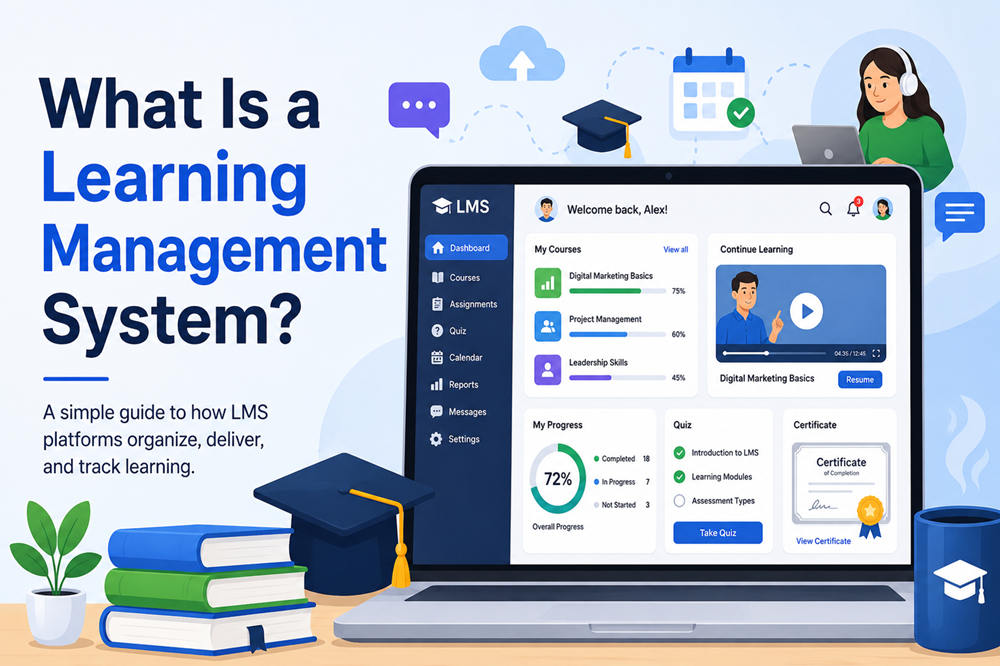
A learning management system, or LMS, is a digital platform used to deliver, organize, and track education or training. It gives learners one place to find lessons, watch videos, complete quizzes, submit assignments, and check their progress.
Schools often use an LMS to manage online classes and support classroom learning. Businesses use these systems to train employees, introduce new hires to company policies, and keep track of required certifications.
In simple terms, an LMS works like an online classroom. Teachers, trainers, or managers add course materials, while students or employees log in and complete the learning activities assigned to them.
How Does a Learning Management System Work?
An administrator or instructor first creates a course inside the LMS. The course might include written lessons, videos, presentations, downloadable files, quizzes, or assignments.
Learners receive an account or enrollment link. After signing in, they can open their courses and work through the material. Depending on the course, they may follow a fixed schedule or complete lessons at their own pace.
The system records their activity, including completed lessons, quiz scores, assignment submissions, and certificates. Instructors and managers can use this information to see who is making progress and who may need help.
Common LMS Features
Learning management systems differ, but most include a similar set of tools.
Course Content
Instructors can upload lessons, documents, videos, audio files, and presentations. Keeping everything in one place makes it easier for learners to find the materials they need.
Quizzes and Assignments
An LMS can be used to create tests, short quizzes, surveys, and written assignments. Some quizzes are graded automatically, while others require an instructor to review the answers.
Progress Tracking
The platform records which lessons a learner has opened or completed. It may also track scores, attendance, deadlines, and course completion.
This is especially useful for organizations that must confirm employees have completed safety, security, or compliance training.
Communication Tools
Many platforms include announcements, calendars, discussion boards, messages, and automatic reminders. These tools help instructors share updates without relying on long email chains.
Reports and Certificates
Instructors and managers can view reports showing completion rates, quiz results, and learner activity. Some systems automatically issue certificates after a person completes a course or passes an assessment.
Mobile Access
Many learning management systems work on phones and tablets. This allows learners to study or complete training without always needing a desktop computer.
Who Uses an LMS?
Learning management systems are used in education, business, government, and many other fields.
Schools and Universities
Teachers can post readings, collect assignments, give quizzes, share grades, and communicate with students through an LMS.
The platform may support a fully online course or simply provide extra materials for an in-person class. UNESCO provides a broader explanation of how digital learning is changing access to education around the world.
Businesses
Companies commonly use an LMS for:
- New employee onboarding
- Workplace safety training
- Compliance courses
- Product education
- Customer service training
- Leadership development
- Technical skills training
An online system allows a business to provide the same core training to employees in different offices, cities, or countries.
Independent Instructors
Coaches, consultants, and course creators can use an LMS to offer classes to clients or paying students. The platform may handle enrollment, payments, lessons, assessments, and certificates.
Nonprofit and Government Organizations
These organizations may use an LMS to train staff, volunteers, contractors, or members of the public. Courses could cover emergency procedures, public safety, professional development, or community services.
Types of Learning Management Systems
There are several kinds of LMS platforms, but the main difference is how they are hosted and managed.
Cloud-Based LMS
A cloud-based LMS is hosted by the software provider and accessed through the internet. The provider usually handles updates, maintenance, and storage.
This option is often easier for smaller organizations because it does not require them to run their own servers.
Self-Hosted LMS
A self-hosted LMS is installed on an organization’s own server. This can provide more control over data and customization, but it also requires technical support, security management, updates, and backups.
Open-Source LMS
An open-source LMS allows organizations to view and change the software’s code. This provides more freedom to customize the platform, although technical knowledge is usually needed to manage it properly.
Benefits of Using an LMS
A learning management system can make education and training easier to manage.
Easier Access
Learners can access courses from different locations and, in many cases, at any time. This is helpful for remote workers, online students, and people with busy schedules.
Consistent Training
An LMS helps ensure that everyone receives the same basic information. For example, every new employee can complete the same onboarding course instead of receiving different instructions from different managers.
Clearer Progress Records
The system keeps a record of completed lessons, assessment results, and certificates. This reduces the need to track everything manually with emails or spreadsheets.
Reusable Courses
Once a course has been created, it can often be used again for future students or employees. Instructors can update individual lessons without rebuilding the entire program.
Flexible Learning
Self-paced courses allow people to pause videos, repeat lessons, and spend more time on difficult topics. This can make training more comfortable for learners who move at different speeds.
Possible Drawbacks
An LMS is only a tool. It cannot fix weak teaching or poorly designed course content.
A course may still feel confusing or boring if it contains long blocks of text, unclear instructions, or too many quizzes. Some learners may also miss the personal interaction of a classroom.
Other challenges can include:
- Setup or subscription costs
- Technical problems
- Limited internet access
- Staff training needs
- Data privacy concerns
- Low participation
- Difficulty moving courses to another platform
Organizations should choose a system that is simple enough for both instructors and learners to use.
How to Choose an LMS
Before choosing a platform, an organization should think about what it actually needs.
Important questions include:
- How many people will use the system?
- Will learners use computers, phones, or both?
- Does the organization need quizzes or certificates?
- What reports must managers or teachers be able to view?
- Does the LMS need to connect with other software?
- Who will provide technical support?
- How will learner data be protected?
A platform with many advanced features is not always the best choice. An LMS should make learning easier, not add unnecessary steps. Testing a free trial or demonstration can help instructors see whether the platform is easy to navigate.
A Simple LMS Example
Imagine a company hires 20 new employees.
Instead of giving each person a stack of documents, the company creates an onboarding course in its LMS. The course includes a welcome video, workplace policies, safety instructions, software tutorials, and a short quiz.
Each employee logs in and completes the course. The training manager can then see who has finished, who passed the quiz, and who still has lessons to complete.
The LMS keeps the training organized and creates a clear record without requiring the manager to follow up through several emails and spreadsheets.
LMS vs. Online Course
An LMS is not the same as an online course.
The online course is the actual learning material, including lessons, videos, quizzes, and assignments. The LMS is the platform used to store, deliver, and track that course.
One LMS may contain a single course or thousands of courses for different groups of learners.
Final Thoughts
A learning management system is a platform that brings lessons, assessments, communication, and progress tracking into one place. It can help schools, businesses, and independent instructors provide more organized and accessible learning.
The system works best when it is easy to use and supports well-designed courses that give learners clear, useful information.