Kelly Rowland Motivation Lessons for Confidence, Growth, Resilience, and Lasting Success in Life
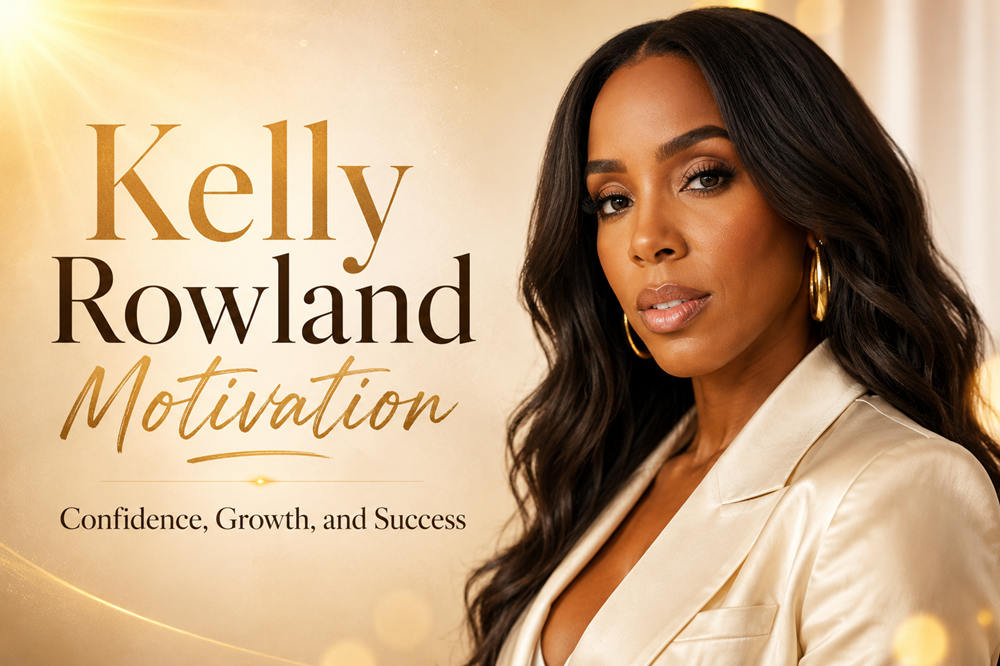
Kelly Rowland has spent decades growing in public. She rose to fame with Destiny’s Child, built an independent career, became a wife and mother, and continued creating through major personal and professional changes.
The motivation behind her journey is not based on constant confidence or effortless success. It comes from discipline, self-belief, supportive relationships, personal care, and the courage to change direction when life demands something new.
Who Is Kelly Rowland?
Kelly Rowland is an American singer, songwriter, actress, author, and television personality. She became internationally famous as a member of Destiny’s Child alongside Beyoncé Knowles and Michelle Williams.
After the group’s success, Rowland established herself as a solo performer. Her best-known songs include “Dilemma,” “When Love Takes Over,” “Commander,” and “Motivation.” Her work has received recognition from the Recording Academy.
Rowland has also acted in movies, judged and coached contestants on television competitions, written books, and worked on fashion and wellness projects. She is married to Tim Weatherspoon, and they have two sons.
Her journey offers useful lessons about confidence, comparison, discipline, friendship, motherhood, and defining success for yourself.
Kelly Rowland’s Motivational Lessons
1. Believe in Your Value Before Other People Recognize It
Public approval can make you feel successful, but it cannot create lasting self-belief.
Rowland entered the entertainment industry at a young age and spent years being evaluated by audiences, executives, critics, and the media. Building her own career required her to recognize that her value did not depend entirely on how other people ranked or described her.
You may face similar pressure in a different setting. Employers, relatives, partners, or social media followers may have opinions about what you should do and how successful you appear.
Listen to useful feedback, but do not hand everyone else the authority to define you. Confidence becomes stronger when it is supported by preparation, experience, and the promises you keep to yourself.
2. Stop Measuring Your Life Against Someone Else’s Journey
Comparison has followed Rowland throughout much of her career. As a member of an enormously successful group, she was often compared with the women performing beside her.
That experience reflects a common problem. You may be proud of someone and still question your own progress when their achievements appear larger, faster, or more visible.
Comparison becomes harmful when it prevents you from seeing your own strengths. It can make meaningful progress feel insignificant simply because another person is moving differently.
Instead of asking whether you are ahead or behind, look at your own development. Are you more skilled, prepared, confident, or emotionally healthy than you were last year? That question gives you information you can actually use.
3. Build an Identity Beyond the Role That Made You Successful
Destiny’s Child gave Rowland worldwide recognition, but remaining known only as a group member would have limited her growth.
She had to discover what she wanted to create independently. Her solo music, acting, television work, writing, and other projects allowed her to explore parts of her identity that did not always fit inside the group.
You can be grateful for a role without allowing it to define your entire future.
You may be known as a reliable employee, a full-time parent, someone’s partner, or the friend who always solves problems. Those roles can be important, but they are not the complete story of who you are.
Make room for interests and abilities that belong to you, even when other people are more comfortable with an earlier version of your life.
4. Let Setbacks Give You Direction
A disappointing outcome can hurt without becoming the end of your story.
Rowland’s career has included changing group lineups, industry pressure, solo projects with different levels of commercial success, and the challenge of moving beyond an established public image. Continuing required her to adapt rather than treating every difficult period as proof that she had failed.
When something does not work, separate the result from your identity. A rejected application does not mean you have no ability. A slow project does not mean the goal is impossible. A mistake does not cancel everything you have learned.
Ask what the experience revealed. You may need better preparation, stronger boundaries, more time, or a different opportunity. Setbacks become useful when they help you make a clearer next decision.
5. Rely on Discipline When Motivation Is Low
Rowland’s career has involved years of rehearsals, studio sessions, tours, interviews, television appearances, acting work, and business responsibilities.
That level of work cannot depend on waking up inspired every day.
Motivation is helpful, but it changes with your mood, energy, and circumstances. Discipline gives you something steadier. It allows you to complete important actions even when they are no longer exciting.
Create a minimum version of your routine for difficult days. You might exercise for 15 minutes instead of an hour, write one page instead of five, or complete one important task before stopping.
Consistency does not require perfect performance. It requires returning to the work often enough for progress to continue.
6. Rebuild Confidence Instead of Pretending It Never Changes
Confidence can rise and fall throughout your life.
Success does not protect you from insecurity, criticism, physical changes, or self-doubt. Rowland has discussed becoming more secure as she matured and developed a clearer sense of herself outside public expectations.
When your confidence drops, do not force yourself to act as though nothing is wrong. Identify what has affected it.
You may need rest, better preparation, healthier relationships, professional guidance, or time away from an environment that constantly makes you question yourself.
Then begin rebuilding through action. Practice the skill, complete a manageable challenge, and spend time with people who see you clearly. Confidence often returns after you begin participating in your life again.
7. Surround Yourself With People Who Strengthen You
One of Rowland’s most personal motivational ideas is the importance of a supportive “shecosystem.” She has used the term to describe a trusted community of women who provide friendship, wisdom, honesty, and practical support.
That kind of community became especially meaningful as she experienced motherhood, career changes, and the loss of her mother.
You do not need a large social circle. You need people who can celebrate your success without becoming resentful and offer honest advice without trying to control you.
A strong support system should also feel mutual. Make time to listen, encourage, and show up for the people who support you.
Independence is valuable, but it should not become isolation.
8. Give Yourself Grace During Difficult Seasons
Rowland has spoken about giving herself grace while balancing work, marriage, motherhood, wellness, and the changes that come with getting older.
Grace does not mean ignoring your responsibilities. It means refusing to treat every imperfect day as evidence that you are failing.
There will be periods when your energy is lower, your schedule changes, or personal responsibilities demand more attention. During those times, you may need to adjust your expectations without abandoning your goals.
Recognize what you were able to do, correct what needs attention, and restart without turning the mistake into a personal attack.
Shame may push you briefly, but it rarely creates healthy long-term progress.
9. Care for Your Body as Part of Your Success
Rowland has often discussed fitness, strength training, stretching, and wellness. Her approach shows that caring for your body is not only about appearance. It can help you maintain the energy needed for work, parenting, travel, creativity, and everyday responsibilities.
A useful wellness routine should make your life more manageable, not become another source of pressure.
Choose movement that fits your abilities and schedule. Walking, dancing, lifting weights, swimming, or following a short home routine can all support physical and mental health.
Rest also matters. Working until you are constantly exhausted is not a sign that you are more committed than everyone else.
Your health supports every other goal you are trying to reach.
10. Allow Your Priorities to Change
The things that motivate you at 20 may not be the same things that matter at 40.
Rowland’s career remains important, but marriage and motherhood have influenced the projects she chooses and the example she wants to set for her children. In interviews, she has discussed teaching her sons empathy, self-respect, responsibility, and healthy communication.
Changing your priorities does not mean you have become less ambitious. It may mean your definition of a meaningful life has become more complete.
You are allowed to change a goal that no longer fits. You are also allowed to move more slowly when your responsibilities grow.
A plan should serve your life. Your life should not be controlled by an outdated plan.
11. Turn Personal Experiences Into Something Useful
Rowland has used parts of her own experience to support other women and parents. Her books include Whoa, Baby!, which discusses early motherhood, and Always With You, Always With Me, a children’s book about the bond between a working mother and her child.
You do not need to publish a book to turn experience into something useful.
You might help a friend through a situation you have already faced, mentor someone entering your field, or explain a lesson that once took you years to understand.
Sharing your experience does not require revealing every private detail. It simply means allowing what you learned to benefit someone else.
12. Define Success According to Your Own Values
Rowland’s achievements include hit records, awards, international performances, acting roles, and television appearances. Yet her discussions about success increasingly include family, health, friendship, faith, confidence, and personal peace.
That wider definition matters.
Success may mean earning more money or reaching a major career milestone. It may also mean leaving an unhealthy environment, becoming more present with your family, recovering from grief, or finally feeling comfortable with who you are.
Choose goals that improve your real life, not only its public appearance.
You do not have to reject ambition. You simply need to make sure your ambition is taking you somewhere you genuinely want to go.
How to Apply Kelly Rowland’s Motivation to Your Life
You can begin using these lessons without making a dramatic change.
- Choose one meaningful goal. Select something that matters to you rather than something designed mainly to impress others.
- Create a repeatable action. Decide what small step you can take several times each week, even when motivation is low.
- Check your comparisons. When another person’s success makes you feel behind, return your attention to your own progress.
- Identify your support system. Stay connected to people who offer both encouragement and honest guidance.
- Protect your health and energy. Build rest, movement, and clear boundaries into your routine.
- Review your definition of success. Make sure your current goals still reflect the life you want now.
Frequently Asked Questions
What Motivates Kelly Rowland?
Kelly Rowland appears to draw motivation from her family, faith, creative work, personal growth, supportive friendships, and the desire to use her experiences in meaningful ways.
What Does Kelly Rowland Teach About Confidence?
Her journey shows that confidence develops over time. It becomes stronger when you stop depending entirely on outside approval, recognize your own abilities, and continue taking action through periods of doubt.
How Did Destiny’s Child Influence Kelly Rowland’s Work Ethic?
Performing in Destiny’s Child required discipline, teamwork, preparation, and the ability to work under intense public pressure. Those skills helped Rowland build a long career beyond the group.
Is “Motivation” a Kelly Rowland Song?
Yes. “Motivation” is a 2011 Kelly Rowland song featuring Lil Wayne. It appeared on her album Here I Am and became one of her best-known solo recordings.
What Can You Learn From Kelly Rowland’s Career?
Her career shows that you can appreciate where you started while still creating an independent identity. It also highlights the value of discipline, reinvention, supportive relationships, and allowing your priorities to evolve.
Conclusion
Kelly Rowland’s story is motivating because it includes growth, comparison, uncertainty, reinvention, family, and personal loss—not only awards and hit songs.
Her journey shows that lasting motivation is built through regular choices. Believe in your value, keep working when excitement fades, accept support, care for yourself, and allow your definition of success to change as you do.