What Are Customs in Culture? Meaning, Examples, and Their Role in Society
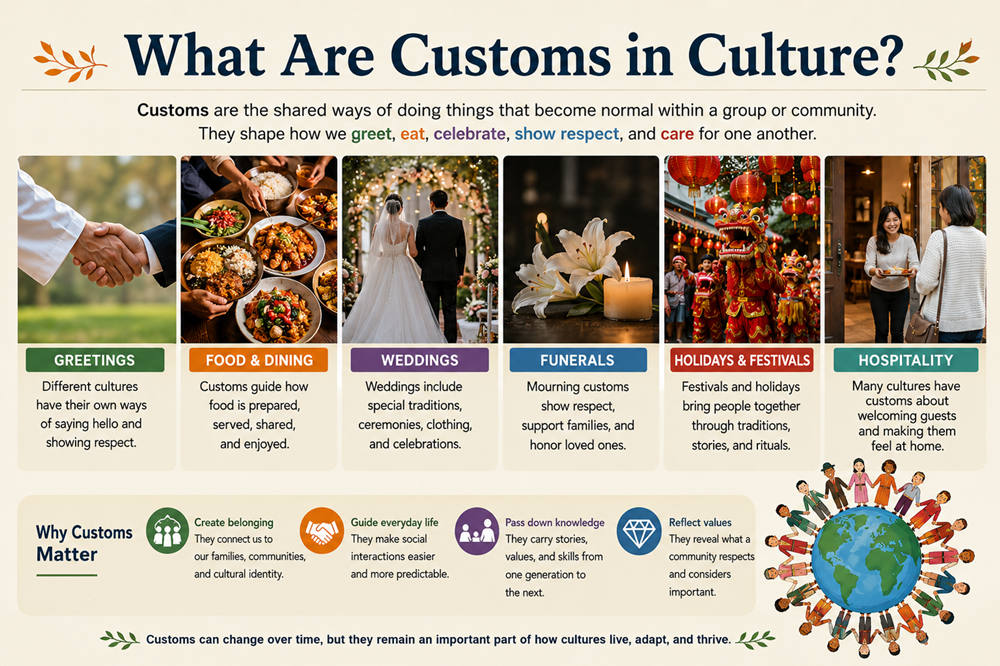
Customs in culture are shared ways of behaving that become normal within a group or community. They influence everyday things like greetings, meals, clothing, celebrations, weddings, funerals, and how guests are treated.
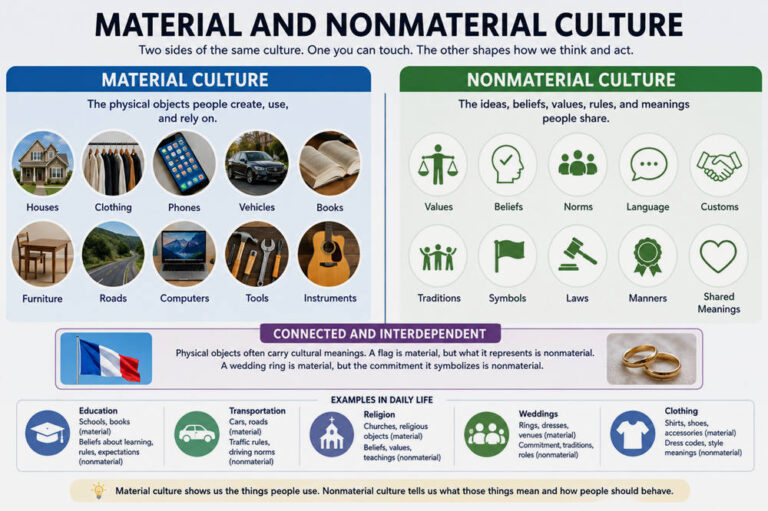
You usually learn customs simply by growing up around them. Families and communities repeat certain practices until they become familiar expectations. Along with values, beliefs, language, and norms, these shared practices help shape a culture.
What Are Customs in Culture?
A cultural custom is an established way of doing something that people within a particular group commonly recognize and follow.
Customs do not necessarily have to be written down or formally enforced. You may follow one because your family has always done it, because people around you expect it, or simply because it feels like the normal thing to do. Sociologists study how these shared customs and social norms influence behavior and social order.
Common customs can involve:
- Greeting other people
- Showing respect to elders
- Serving food to guests
- Dressing for important events
- Giving gifts
- Celebrating births
- Holding weddings
- Mourning someone who has died
- Observing holidays
- Following certain table manners
Some customs are part of everyday life, while others appear mainly during important events.
Common Examples of Cultural Customs
The easiest way to understand customs is to look at how they appear in ordinary life. A practice that seems completely normal to you may be unfamiliar to someone who grew up in a different culture.
Greetings
Different cultures have different expectations about how people should greet one another.
You might:
- Shake hands
- Hug
- Bow
- Kiss someone on the cheek
- Nod
- Use a person’s title
- Place your hands together
- Avoid physical contact altogether
The appropriate greeting can also depend on someone’s age, relationship, social position, or the setting.
For example, the way you greet a close friend may be completely different from how you greet a manager, teacher, elder, or stranger.
Greetings are a good example of how customs make everyday interactions easier. When everyone understands what is expected, people do not have to invent a new way of behaving every time they meet.
Food and Dining Customs
Food is closely connected to culture, but dining customs are about more than what people eat.
A community may have expectations about:
- Who gets served first
- When people begin eating
- Where family members or guests sit
- Whether food is eaten with hands, chopsticks, or other utensils
- Whether guests are expected to accept food
- Which dishes are prepared for special occasions
- How meals are shared
Hospitality is often connected to food as well. Offering a guest a meal, snack, tea, coffee, or another drink may be an important sign of welcome in some communities.
UNESCO includes culinary traditions among the many social practices that can form part of living cultural heritage.
Wedding Customs
Weddings are full of cultural customs.
These may involve:
- Special clothing
- Religious ceremonies
- Music and dancing
- Particular foods
- Gift-giving
- Family roles
- Processions
- Speeches
- Symbolic objects
- Several days of celebrations
The details can vary greatly.
In one culture, a wedding may be a small ceremony followed by a meal. Somewhere else, it may involve large gatherings, several ceremonies, extended family participation, and practices followed across generations.
Wedding rituals are among the social practices, rituals, and festive events that communities may maintain as part of their cultural heritage.
Funeral and Mourning Customs
Cultures also have different ways of responding to death.
Funeral and mourning customs can affect:
- What people wear
- How condolences are offered
- Whether burial or cremation is practiced
- How long mourning lasts
- What prayers or ceremonies are performed
- Whether food is shared
- How the deceased person is remembered
These customs often carry strong emotional meaning. Following them can be a way of showing respect to the person who died and supporting their family.
Because mourning practices differ, behavior meant as respectful in one culture may not always be appropriate in another. UNESCO includes funeral rituals among the many forms that community social practices can take.
Holiday and Festival Customs
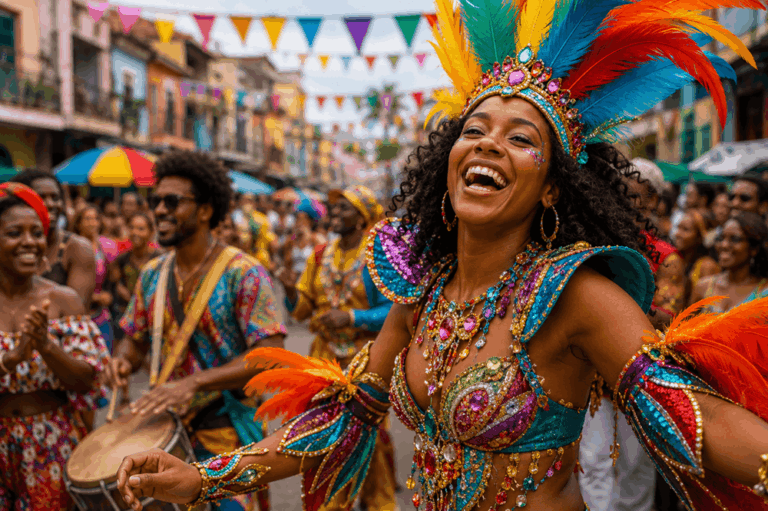
Holidays and festivals often bring customs into especially clear view.
People may:
- Decorate their homes
- Prepare particular foods
- Attend religious services
- Exchange gifts
- Wear special clothing
- Perform traditional music or dances
- Visit relatives
- Join community celebrations
- Tell stories connected to the occasion
Repeating these activities year after year can give a holiday much of its meaning.
Rituals, seasonal ceremonies, rites of passage, traditional games, and other festive events are recognized as forms of intangible cultural heritage when communities consider them part of their living heritage.
Hospitality Customs
How you treat a visitor can also be shaped by culture.
In some homes, guests may be offered food as soon as they arrive. In others, visitors might remove their shoes before entering, bring a small gift for the host, or wait until they are invited to sit or eat.
These practices may look like small details, but they often communicate welcome, politeness, generosity, and respect.
How Do People Learn Cultural Customs?
Most customs are learned naturally through everyday life.
Children watch how parents and relatives behave. They attend weddings, funerals, birthdays, religious services, festivals, meals, and community gatherings. Over time, they begin to understand what people around them expect.
Someone might learn that you always bring a certain dish to a family celebration, greet an older relative in a particular way, or dress differently for a religious event.
No formal lesson may be necessary.
Customs can be passed through:
- Parents and grandparents
- Extended families
- Religious communities
- Schools
- Neighborhoods
- Friends
- Workplaces
- Local organizations
- Community events
This passing of practices between people and generations is one reason customs can survive for a long time. UNESCO describes living cultural heritage as practices, expressions, knowledge, and skills that communities recognize as part of their heritage and pass on to future generations.
Cultural transmission does not always mean copying a practice exactly. Living heritage can be recreated and adapted as it moves from one person or generation to another.
Why Are Customs Important in Culture?
Customs matter because they give people familiar expectations about how to behave and interact.
They Make Everyday Interaction Easier
If you already know how people normally greet each other, behave during meals, attend ceremonies, or welcome visitors, social situations become easier to navigate.
You do not need someone to explain every expectation each time.
Customs provide a shared understanding of what is considered appropriate in common situations. Cultural norms can help people navigate everyday life and support smoother social interaction.
They Help Create a Sense of Belonging
Participating in familiar customs can connect you to a family, community, or cultural group.
A certain holiday meal may remind you of childhood. A wedding practice may connect several generations of a family. A local festival can create a sense of shared identity among people who live in the same area.
The activity itself may be simple, but the meaning attached to it can be much deeper. UNESCO’s 2003 Convention notes that cultural heritage transmitted and recreated by communities can contribute to a sense of identity and continuity.
They Pass Knowledge Between Generations
When customs are repeated, younger people learn from older generations.
They may learn recipes, songs, ceremonies, ways of showing respect, religious practices, family roles, or knowledge connected to the local environment.
This does not mean every younger person follows a custom exactly as previous generations did. Often, people keep the parts that remain meaningful while adapting others.
UNESCO describes transmission as an ongoing process in which living heritage evolves while being passed from person to person and from generation to generation.
They Reflect What a Community Values
Customs can reveal what matters to a group.
Strong hospitality customs may show the importance placed on welcoming visitors. Practices involving elders may reflect respect for age and experience. Large family celebrations may highlight the importance of family and community relationships.
You should not assume that every individual within a culture shares exactly the same values, but repeated customs can still provide useful context for understanding a community.
Cultural Customs Differ Around the World
There is no single set of customs that everyone follows.
Something considered polite in one place may seem unusual somewhere else. Customs involving eye contact, physical touch, punctuality, clothing, gifts, meals, and personal space can all vary.
Even a simple greeting can have different meanings.
That is why it helps to understand a practice within the culture where it developed rather than assuming your own way of doing something is the universal standard. OpenStax discusses this issue through the concept of ethnocentrism, or judging another culture according to the standards of your own.
At the same time, cultural customs should not become stereotypes.
Not everyone from the same country, religion, or community behaves the same way. Customs can vary by region, generation, family, social setting, and personal preference.
It is better to treat knowledge about customs as helpful context rather than as a strict rule for predicting how every person will behave.
Can Cultural Customs Change?
Yes. A custom can be old without being permanent.
Migration can bring different cultural practices together. Technology can change how people communicate and celebrate. Families from different backgrounds may combine customs. Younger generations may simplify, reinterpret, or stop following practices that were important to their grandparents.
Some customs disappear. Others change while keeping their original purpose.
A family gathering, for example, might still be important even if the food, clothing, entertainment, or way relatives participate changes over time.
UNESCO explains that living heritage is continuously changing and being recreated as it passes between generations and responds to people’s environments and circumstances.
That flexibility helps explain why cultural customs can remain meaningful even as societies change.
Ultimately, customs are the shared practices that help shape everyday life within a culture. From greetings and dining etiquette to weddings, festivals, hospitality, and mourning, they give people familiar ways to interact, celebrate important moments, and express what matters to their communities.