
Leadership Development Consultants: What They Do and How to Choose One
Organizations do not always struggle with leadership because they lack talented people. The problem may be unclear expectations, uneven manager preparation, weak succession planning, or development programs that are disconnected from everyday work.
Leadership development consultants help diagnose these issues and create a more deliberate approach to preparing leaders. Their work can include assessments, program design, coaching, team development, succession planning, and improvements to the systems that influence how leadership is practiced.
What Is a Leadership Development Consultant?
A leadership development consultant is an external specialist who helps an organization strengthen the people responsible for managing teams, making decisions, leading change, and carrying out strategy.
The scope of the work varies. One consultant may help prepare employees for their first management roles, while another works with senior executives or facilitates development across several leadership levels. The assignment should reflect the organization’s actual needs rather than follow a standard package.
This broader perspective is important because effective organizational leadership development is not limited to classroom training. It also involves experience, feedback, support, and systems that reinforce the expected behaviors.
Leadership Consultant vs. Executive Coach vs. Trainer
Leadership consultants, executive coaches, and trainers may address related subjects, but they perform different functions.
- A leadership development consultant examines organizational needs and designs broader solutions. The work may involve several leaders, teams, programs, or talent processes.
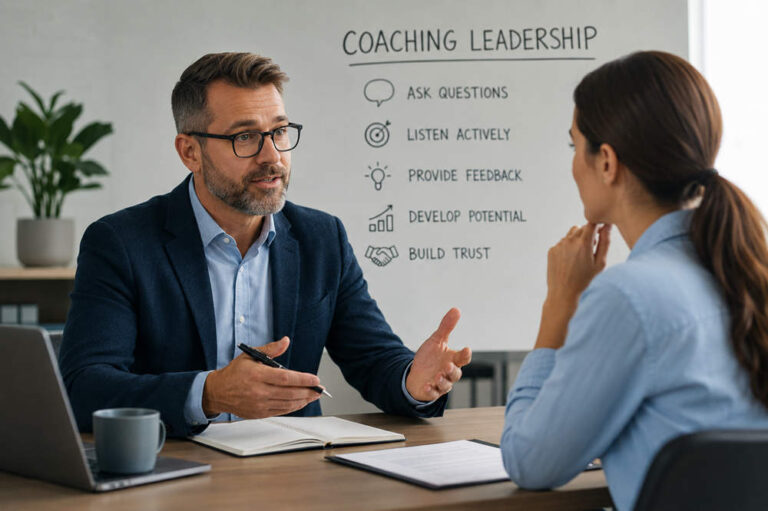
- An executive coach works through an agreed developmental relationship with an individual leader or team. The coach supports reflection, goal setting, and action rather than prescribing an organization-wide solution.
- A trainer teaches defined knowledge or skills through structured sessions, exercises, and learning materials.
One professional or firm may provide all three services. Before hiring anyone, the organization should clarify whether it needs diagnosis, advice, coaching, skill instruction, or a combination of these forms of support.
Problems Leadership Development Consultants Help Solve
Consultants are often brought in when an organization can see a recurring leadership problem but has not identified its underlying cause.
Inconsistent Management Practices
Employees may have very different experiences depending on who manages them. Some managers communicate expectations clearly and address problems promptly, while others avoid difficult conversations or apply standards unevenly.
These differences may reflect unclear leadership expectations, limited preparation, or inconsistent accountability rather than isolated personality problems.
Difficult Transitions Into Management
Strong individual contributors are frequently promoted because of their technical knowledge and reliability. Management, however, requires a different set of capabilities, including delegation, coaching, prioritization, conflict management, and decision-making through others.
Without support, new managers may continue doing their former work, take over tasks from employees, or hesitate to address performance concerns.
Misalignment Between Leadership Levels
Senior leaders may set a direction without giving middle and frontline managers enough context to implement it. Managers then interpret priorities differently, producing conflicting instructions and fragmented decisions.
The underlying issue may involve communication, unclear authority, or weak coordination between levels rather than a simple lack of leadership skill.
Leadership-Team Dysfunction
A group of capable executives does not automatically operate as an effective leadership team. Members may defend departmental interests, avoid direct disagreement, revisit settled decisions, or leave shared priorities without clear ownership.
In these situations, the team needs to improve how it makes decisions, resolves tension, and accepts collective responsibility.
Weak Succession Readiness
An organization may know who performs well today without knowing who could assume greater responsibility in the future. Potential successors may receive little exposure to unfamiliar functions, strategic decisions, or enterprise-wide work.
This creates risk when experienced leaders leave and no one has been prepared to take over critical responsibilities.
Training That Does Not Change Behavior
Leadership workshops may receive positive reactions without producing noticeable changes afterward. Participants return to the same workload, incentives, habits, and management environment they left before the course.
The problem may be insufficient practice, weak follow-up, or a lack of connection between the learning and real leadership responsibilities.
What Leadership Development Consultants Do
The services provided should follow from the diagnosis. A consultant may perform one focused task or combine several forms of support within a wider leadership initiative.
Assess Leadership Needs
Assessment begins with understanding the organization rather than evaluating people in isolation. Consultants may interview executives and managers, review employee feedback, observe meetings, examine existing development efforts, and study the capabilities required by the business strategy.
Some engagements include 360-degree feedback, which compares a leader’s self-perception with perspectives from supervisors, peers, direct reports, and other colleagues. Used carefully, it can reveal strengths, development needs, and differences in how a leader’s behavior is experienced.
The assessment should lead to a clear explanation of what needs to change and why. Collecting data without turning it into practical priorities adds little value.
Define Leadership Expectations
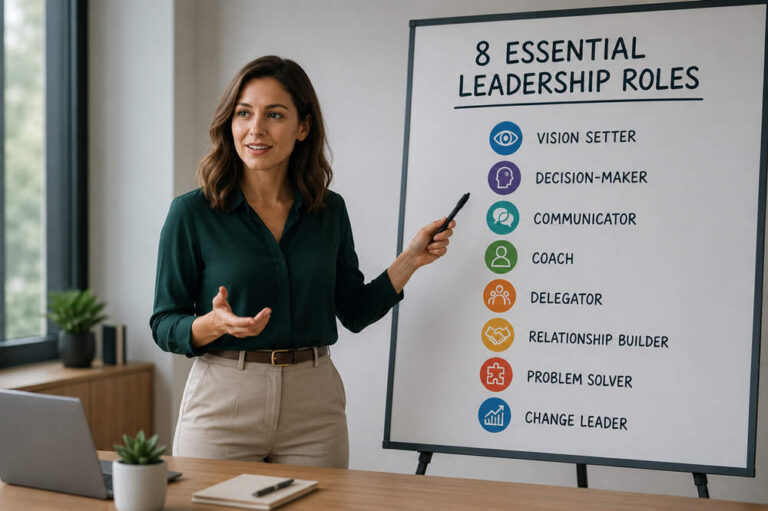
Broad descriptions such as “strong communicator” or “strategic leader” are difficult to apply consistently. Consultants can help translate these ideas into observable behaviors.
An organization might expect managers to set priorities, explain decisions, delegate responsibility, address performance concerns, and develop employees. Senior executives may also be expected to allocate resources across functions, anticipate external change, and create alignment around long-term choices.
Clear expectations provide a common foundation for hiring, promotion, feedback, performance discussions, and development planning.
Design Leadership Development Programs
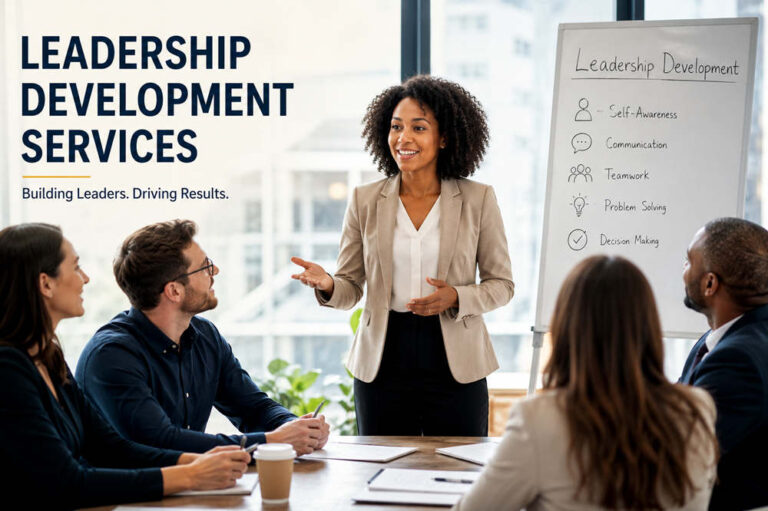
A development program may combine workshops, peer learning, coaching, simulations, mentoring, case discussions, guided reflection, and developmental assignments.
The selection of activities should be purposeful. A workshop can introduce a framework, but participants also need opportunities to use it. A cross-functional project may develop influence and decision-making, while feedback and coaching can help participants understand how their behavior affects others.
Strong programs connect learning with real-world application and continuing support. The goal is not to include as many activities as possible, but to create a coherent experience that helps leaders practice relevant behaviors.
Provide Individual Coaching
Coaching gives a leader private space to examine a defined developmental challenge. A first-time manager might focus on delegation and confidence, while an executive may work on influencing peers, communicating during uncertainty, or adjusting to greater responsibility.
The coach helps the leader interpret situations, recognize patterns, consider alternatives, and commit to specific actions. Coaching should strengthen the leader’s judgment rather than create dependence on the coach for decisions.
Develop Leadership Teams
Team development concentrates on how leaders operate together. It may address shared purpose, decision rights, working relationships, meeting practices, trust, or unresolved conflict.
A consultant can facilitate conversations that are difficult for a team to manage alone. This is particularly useful when members understand their individual responsibilities but struggle to coordinate across functions or hold one another accountable.
Support Succession Planning
Consultants can help identify roles that are critical to continuity and define what genuine readiness for those roles requires. This allows internal candidates to be discussed more consistently and prepared through relevant experience.
Development may include leading a cross-functional initiative, managing a larger team, working in another part of the business, or taking responsibility during a significant change.
This process should distinguish current performance from future readiness. Success in one role does not automatically mean that an employee is prepared for a position with broader or substantially different demands.
Strengthen Internal Leadership Systems
Formal programs are only one influence on leadership behavior. Promotion standards, performance management, meeting structures, incentives, onboarding, and senior-leader conduct also show people what the organization values.
A consultant may help align leadership development with these systems so that employees are not taught one set of behaviors while being rewarded for another.
When an Organization May Need a Consultant
Not every leadership issue requires external support. Internal HR, learning, and executive teams may be able to address a clearly defined need themselves. A consultant becomes more useful when the organization faces a major transition, needs specialized expertise, or would benefit from a neutral perspective.
Rapid Organizational Growth
Growth can create management roles faster than employees can be prepared to fill them. Informal practices that worked in a smaller company may become unreliable as teams, locations, and reporting relationships expand.
A Change in Business Strategy
A new direction may require different leadership behavior. Expansion may demand stronger delegation and cross-functional coordination, while a major efficiency effort may require clearer ownership and more disciplined follow-through.
A Merger or Reorganization
Structural change creates uncertainty about authority, identity, communication, and decision-making. Leaders may need support forming new relationships and working across previously separate groups.
A Large Increase in First-Time Managers
When many employees enter management at once, relying on individual supervisors to prepare them can produce inconsistent results. A shared approach establishes a common foundation while leaving room for role-specific support.
Limited Internal Capacity or Expertise
An internal team may understand the organization well but lack the time or specialist knowledge to conduct assessments, design a program, coach executives, or facilitate sensitive team discussions.
A Need for Neutral Facilitation
Senior-team conflict and other sensitive issues can be difficult for an internal employee to facilitate because of hierarchy and existing relationships. A capable outsider may create a more neutral environment for candid discussion.
Outside status does not guarantee impartiality, however. The consultant must build trust across the group and avoid becoming an advocate for one leader’s preferred outcome.
How to Choose a Leadership Development Consultant
A polished proposal does not establish whether a consultant is suitable. Selection should focus on relevant experience, diagnostic ability, sound methods, ethical judgment, and the practicality of the proposed work.
Look for Relevant Experience
Consider whether the consultant has worked with similar leadership levels, organizational conditions, and business challenges. Industry familiarity may help in specialized environments, but experience with comparable growth, change, or team dynamics can be equally valuable.
Ask what the consultant personally contributed to previous engagements. Participating in a large project is different from leading its assessment, design, coaching, or facilitation.
Examine the Diagnostic Approach
Be cautious when a complete solution is recommended before the consultant has learned much about the organization.
A credible approach should explain who will be consulted, what information will be reviewed, how different perspectives will be handled, and how the findings will shape the work. The process does not need to be lengthy, but it should be sufficient to avoid solving the wrong problem.
Understand the Methods
Consultants may use assessments, competency models, coaching frameworks, or proprietary tools. Ask what each method is intended to reveal and why it suits the situation.
No assessment provides a complete description of a person. The consultant should be able to explain a tool’s limitations, interpret its results responsibly, and avoid treating a score as a final judgment.
Connect the Work to Business Priorities
The proposal should demonstrate how leadership development supports actual organizational needs.
For example, a company expanding rapidly may need managers who can delegate, coordinate across teams, and make decisions without unnecessary escalation. A cultural change may require leaders to demonstrate specific behaviors consistently rather than merely communicate new values.
Review Coaching Qualifications
When coaching is included, examine the coach’s education, organizational experience, ethical commitments, and professional credentials.
A credential can indicate that defined training and experience requirements have been met. It does not guarantee that the coach understands every role, industry, or leadership challenge, so relevant experience and professional fit still matter.
Clarify Confidentiality
Workplace coaching involves both the participant and the organization sponsoring the engagement. Before coaching begins, the coach, participant, and sponsor should agree on what will be reported, what will remain private, and what legal or ethical exceptions may apply.
The ICF Code of Ethics provides a useful reference for evaluating confidentiality, transparency, conflicts of interest, and other professional responsibilities.
The agreement should also explain how assessment results and coaching records will be stored, accessed, and eventually disposed of.
Evaluate the Practicality of the Proposal
Review the timeline, participant workload, internal responsibilities, deliverables, and resources required to sustain the work. A sophisticated program can still fail if managers have no time to support participants or senior leaders do not reinforce its expectations.
The proposal should also define what progress will look like. Relevant indicators might include more consistent management behavior, stronger readiness for critical roles, better leadership-team decisions, or improvement in a specific capability identified during the assessment.
Success criteria should follow from the original problem rather than being chosen after the engagement is underway.
Questions to Ask a Potential Consultant
- How will you diagnose the underlying leadership need?
- What comparable engagements have you personally led?
- Which parts of your approach will be customized?
- Who will conduct the assessments, coaching, and facilitation?
- What will you require from senior leaders and managers?
- How will participants apply the work in their current roles?
- Why are your proposed assessments or frameworks appropriate?
- How will confidentiality and assessment data be handled?
- What signs of progress will be monitored?
- What will our internal team be able to continue after the engagement?
Working With a Consultant Without Creating Dependence
A productive engagement should increase the organization’s ability to develop its own leaders. Internal employees need enough involvement to understand the approach, support participants, and continue useful practices after the consultant leaves.
Knowledge transfer may include:
- Manager conversation guides
- Leadership onboarding materials
- Development-planning templates
- Mentoring guidelines
- Facilitator resources
- Instructions for running peer-learning groups
- Training for internal HR or learning professionals
- Clear ownership of continuing activities
Managers play a particularly important role because employees need permission, practice, feedback, and opportunities to use what they have learned. CIPD’s guidance on the manager’s role in supporting learning reinforces why development cannot remain solely within a training program.
Some services may appropriately remain external. Executive coaching, specialized assessments, and sensitive team facilitation can benefit from independent expertise. The important distinction is whether outside support is being chosen deliberately or retained because no internal capability was developed.
Senior leaders ultimately determine whether the work lasts. When their decisions, behavior, and organizational systems support the same expectations, leadership development becomes part of everyday work rather than a temporary initiative.
Conclusion
Leadership development consultants can help organizations diagnose leadership gaps, prepare managers and executives, strengthen leadership teams, and build more reliable development systems.
The right consultant starts with the organization’s actual needs rather than a standard workshop or coaching package. A successful engagement leaves leaders better prepared and the organization more capable of continuing the work internally.