Which Resource Management Task Enables Resource Coordination Throughout the Incident?
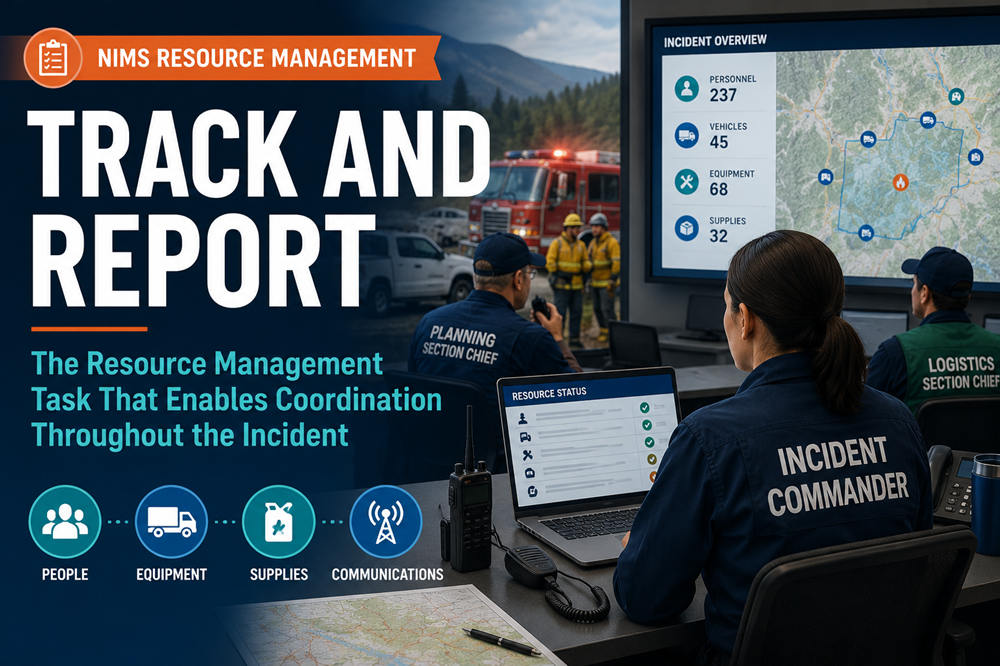
The resource management task that enables resource coordination throughout an incident is Track and Report.
Under the National Incident Management System, or NIMS, Track and Report helps incident leaders maintain accurate information about personnel, equipment, teams, supplies, and facilities. It shows where resources are located, what they are doing, and whether they are available for another assignment.
This information allows different agencies and response teams to coordinate their work throughout the incident.
What Does Track and Report Mean?
Track and Report is one of the six main NIMS resource management tasks. It involves monitoring resources from the time they are requested until they are released from the incident.
Incident personnel may track details such as:
- The resource’s current location
- Its assigned task
- When it arrived
- Which supervisor or unit is responsible for it
- Whether it is assigned, available, or out of service
- When it may be reassigned or released
The goal is to give incident leaders a reliable picture of the resources involved in the response.
A tracking system may be as simple as a paper check-in form for a small local emergency. Larger incidents may use digital resource management systems, status boards, dispatch records, GPS tools, and regular situation reports.
Regardless of the method, the information must remain accurate and accessible.
How Track and Report Supports Resource Coordination
Emergency conditions can change quickly. A medical team may be needed at a different shelter. Fire crews may need additional equipment. A vehicle may break down, or a team may become unavailable because its members need rest.
Incident leaders cannot make effective decisions unless they know the current status of their resources.
Track and Report supports coordination by showing:
- Which resources have arrived
- Where they are assigned
- Which resources remain available
- Which requests have not been filled
- What equipment is damaged or out of service
- Which personnel or teams can be reassigned
- Which resources are ready for release
For example, suppose an incident commander needs another ambulance at an evacuation center. Resource tracking records can show whether an ambulance is available, where it is currently located, and how quickly it can reach the center.
Without accurate tracking, leaders might request an unnecessary ambulance, send one that is already assigned elsewhere, or delay help while trying to locate available units.
The FEMA NIMS resource management lesson explains that tracking provides information about resource locations and status while enabling resource coordination and movement.
Tracking and Reporting Work Together
Tracking collects information about resources. Reporting shares that information with the people responsible for managing the incident.
Resource information may be communicated to:
- Incident Command
- The Planning Section
- Emergency Operations Centers
- Dispatch or communications centers
- Supporting agencies
- Mutual-aid partners
Regular updates help everyone work from the same information. This reduces confusion and prevents different departments from ordering the same resource without realizing that it has already been requested.
Reporting is especially important during incidents involving several agencies or jurisdictions. Each organization may use its own personnel and equipment, but the overall response still needs a common operating picture.
Track and Report Improves Accountability
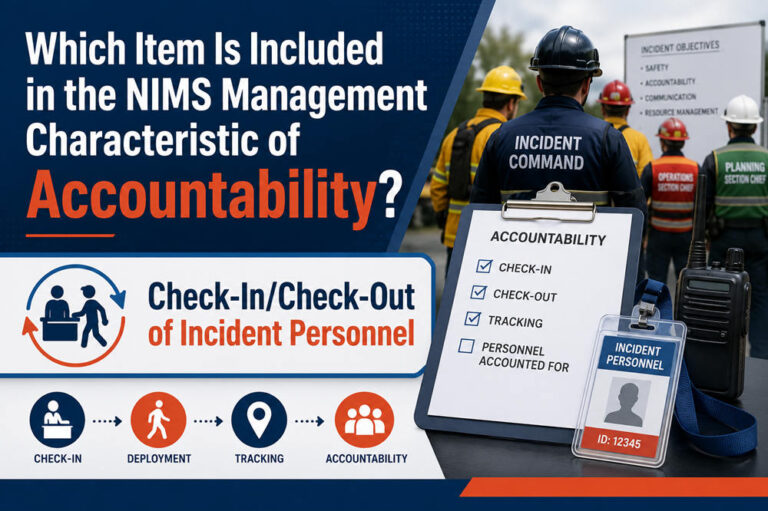
Resource tracking is also essential for safety and accountability.
Supervisors need to know which responders have checked in, where they are working, and who is responsible for them. If conditions suddenly become dangerous, accurate records help leaders determine which personnel may be affected.
Tracking may cover:
- Emergency responders
- Volunteers
- Specialized teams
- Vehicles
- Communications equipment
- Medical supplies
- Tools and machinery
- Temporary facilities
It also helps protect equipment and supplies. When resources come from another department, private company, nonprofit organization, or mutual-aid partner, records should show who received them, where they were used, and whether they were returned.
These records may later support cost documentation, reimbursement, maintenance, and restocking.
Track and Report Versus Mobilize
Track and Report is sometimes confused with Mobilize, but they serve different purposes.
Mobilize activates and deploys resources. This may include notifying personnel, confirming availability, providing instructions, arranging transportation, and sending resources to the incident.
Track and Report monitors those resources after the process begins. It records their location, assignment, availability, condition, and movement.
A simple way to remember the difference is:
- Mobilize gets resources to the incident.
- Track and Report shows where they are and how they are being used.
Mobilize is the correct answer when a question asks which task deploys or activates resources. Track and Report is the correct answer when the question asks which task enables coordination throughout the incident.
The Six NIMS Resource Management Tasks
NIMS identifies six resource management tasks that may occur during an incident:
- Identify Requirements – Determine which personnel, equipment, supplies, teams, or facilities are needed.
- Order and Acquire – Request and obtain the required resources.
- Mobilize – Activate and deploy resources to the incident.
- Track and Report – Monitor resource locations, assignments, availability, and status.
- Demobilize – Release resources safely and efficiently when they are no longer needed.
- Reimburse and Restock – Document costs, process eligible payments, and replace used supplies.
These tasks do not always happen in a simple order. During a large incident, some resources may be arriving while others are being reassigned or released.
Track and Report connects these activities by maintaining current information about every resource involved.
Final Answer
The correct answer is Track and Report.
This task enables resource coordination throughout an incident by giving leaders accurate information about the location, assignment, status, and availability of personnel, equipment, supplies, teams, and facilities. That information supports better decisions, improves accountability, and helps agencies use resources safely and efficiently.