Which Item Is Included in the NIMS Management Characteristic of Accountability?
The correct answer is:
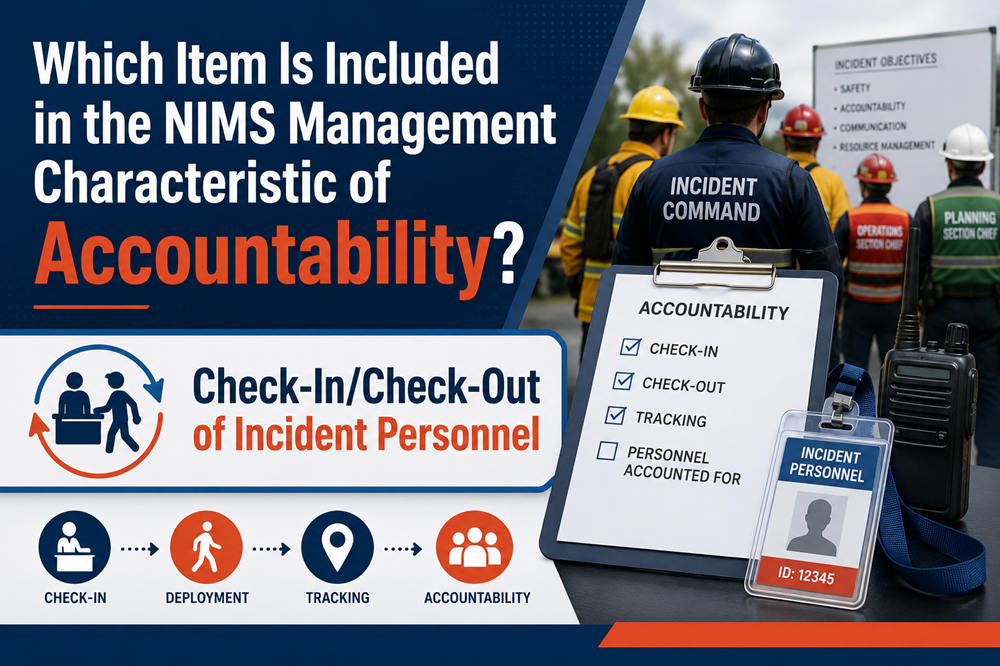
Check-in/check-out of incident personnel
Under the National Incident Management System, accountability helps incident leaders track personnel and resources throughout an emergency. Checking in records when responders arrive and become available for assignments. Checking out confirms when they have finished their work and left the incident.
What Accountability Means in NIMS
Accountability ensures that everyone involved in an incident knows their assignment, supervisor, and responsibilities. It also helps leaders understand who is at the scene, where teams are working, and what resources are being used.
According to FEMA’s NIMS training materials, accountability includes:
- Check-in/check-out
- Incident action planning
- Unity of command
- Personal responsibility
- Manageable span of control
- Resource tracking
Together, these practices create a safer and more organized response.
Why Check-In and Check-Out Matter
Large incidents may involve firefighters, police officers, emergency medical teams, public works employees, volunteers, and personnel from several agencies. Without a formal process, leaders may not know who has arrived or where they have been assigned.
During check-in, personnel may provide information such as:
- Their name and agency
- Their qualifications or job role
- Their arrival time
- The equipment they brought
- Their assigned location
- The name of their supervisor
This information allows incident leaders to assign work properly and quickly locate personnel when needed.
Checking out is also important. It confirms that a responder has completed the assignment, returned equipment, received final instructions, and safely left the incident area.
Other Parts of Accountability
Although check-in/check-out is usually the expected answer to this question, several other NIMS practices support accountability.
Incident Action Planning
An Incident Action Plan explains the goals, assignments, and priorities for an operational period. It helps everyone understand what needs to be done and how their work supports the overall response.
Unity of Command
Unity of command means that each person reports to one designated supervisor. This prevents conflicting instructions and makes it clear who is responsible for directing and evaluating the person’s work.
Personal Responsibility
Every responder is expected to follow instructions, work safely, complete assigned duties, and report problems. Personnel should not leave their assignment or take on a new role without authorization.
Manageable Span of Control
Supervisors should oversee a reasonable number of people or resources. When one supervisor is responsible for too many individuals, communication and safety can suffer.
Resource Tracking
Incident leaders must track personnel, teams, equipment, facilities, and supplies. Accurate records show which resources are available, assigned, or temporarily unavailable.
Accountability and Deployment
Personnel should respond to an incident only after being officially requested and dispatched. Responders who arrive without authorization can create confusion because leaders may not know who they are, what qualifications they have, or where they are working.
Once personnel arrive, they should check in before beginning an assignment. This connects them to the incident command structure and ensures they can be tracked throughout the response.
A Simple Example
Suppose several agencies respond to a major flood. Each team checks in when it arrives and receives a specific assignment. One crew may conduct water rescues, while another helps residents reach an emergency shelter.
Because everyone checked in, incident leaders know how many responders are available, where each team is working, and who supervises them. At the end of the shift, responders check out so leaders can confirm that everyone has safely completed their duties.
How to Remember the Answer
Think of accountability as answering four basic questions:
Who is here? Where are they? What are they doing? Who supervises them?
Check-in/check-out helps incident leaders answer those questions from the moment personnel arrive until they leave.
Therefore, the item included in the NIMS management characteristic of accountability is check-in/check-out of incident personnel.