
Which of the Following Is Not an Important Component of Planning Ahead?
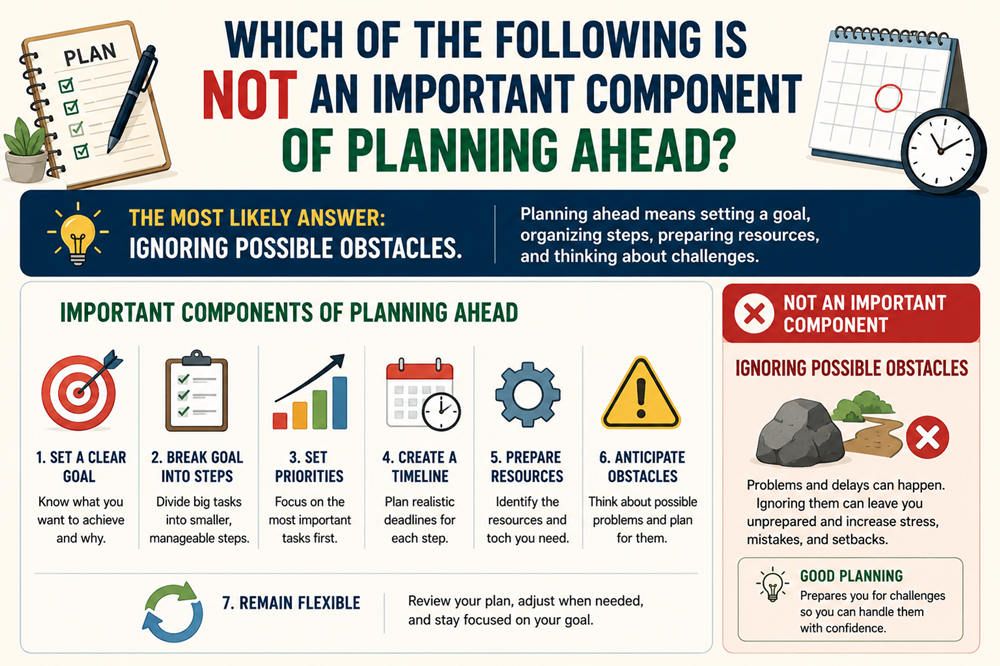
The most likely answer is ignoring possible obstacles.
Planning ahead means setting a goal, deciding what steps to take, preparing the resources you need, and thinking about challenges that could affect your progress. Ignoring potential problems does not support effective planning because it can leave you unprepared when something changes.
Since the answer choices are not included, look for the option that describes poor preparation, procrastination, or a refusal to adjust. That choice is likely the one that is not an important component of planning ahead.
What Does Planning Ahead Mean?
Planning ahead means preparing for a future task, responsibility, or goal before immediate action is required. It helps you decide what needs to be done, when each step should happen, and what you will need to complete it.
You might plan ahead when studying for an exam, completing a work project, saving for a purchase, organizing an event, or preparing for a trip.
A useful plan does not have to predict everything perfectly. It simply gives you direction and helps you respond more effectively when circumstances change.
Important Components of Planning Ahead
Effective planning usually includes several basic elements.
Setting a Clear Goal
Every plan needs a purpose. Before deciding what to do, you should set a clear goal and understand what you are trying to achieve. Clear goals provide direction and make it easier to organize your actions.
For example, “I want to improve my grades” is a broad goal. “I want to raise my math grade before the end of the semester” is clearer and easier to plan for.
A specific goal makes it easier to choose the right actions and measure progress.
Breaking the Goal Into Steps
Large goals often become easier when you divide them into smaller tasks. Each task gives you a manageable action to complete rather than leaving you to deal with the entire goal at once.
If you are preparing a presentation, your steps might include researching the topic, writing an outline, creating slides, and practicing your delivery.
Breaking work into stages helps you see what should happen next. It can also prevent you from feeling overwhelmed by the entire project.
Setting Priorities
Not every task has the same level of importance. Some activities must be completed before others can begin, while certain deadlines may require immediate attention.
Setting priorities helps you focus on the work that has the greatest effect on your goal. Without clear priorities, you may spend too much time on minor details and overlook essential tasks.
Creating a Realistic Timeline
Planning ahead includes estimating how much time the work will require.
A realistic schedule gives you enough time to complete each step without depending on last-minute effort. Calendars can also help you see upcoming deadlines and identify busy periods before they arrive.
An overly ambitious timeline may look organized, but it is not useful if you cannot follow it.
Preparing the Necessary Resources
Before starting, consider what you will need to carry out the plan.
Resources may include:
- Money
- Information
- Equipment
- Materials
- Technology
- Transportation
- Support from other people
Identifying these needs early can prevent avoidable delays. For example, if an assignment requires special software, arranging access in advance is better than discovering the problem on the day it is due.
Anticipating Obstacles
Thinking about possible challenges is an important part of planning ahead.
This does not mean expecting failure. It means recognizing that things do not always happen exactly as planned.
Possible obstacles could include:
- A task taking longer than expected
- A team member becoming unavailable
- An unexpected expense
- A delivery arriving late
- A technical problem
- A change in the schedule
Considering these possibilities allows you to prepare backup options. This is why ignoring possible obstacles would not be an important planning component.
Remaining Flexible
A plan should guide your actions without preventing you from making sensible changes.
New information may become available, priorities may shift, or an original approach may stop working. In these situations, adjusting the plan is often better than following it rigidly.
Flexibility does not mean abandoning the goal. It means changing the method when necessary.
What Is Not Part of Effective Planning?
An answer choice is probably incorrect if it encourages behavior that reduces preparation or makes success less likely.
Examples include:
- Ignoring risks or possible delays
- Waiting until the last minute
- Beginning without a clear goal
- Assuming everything will go perfectly
- Refusing to change the plan
- Focusing only on immediate tasks
These behaviors are not components of planning ahead. They make it harder to manage time, solve problems, and respond to unexpected changes.
A Simple Example
Imagine that you have an important exam in three weeks.
Planning ahead might involve reviewing the course material, dividing it into sections, scheduling study sessions, completing practice questions, and leaving time for a final review.
You may also recognize that one topic could take longer to understand. By starting early, you have time to ask for help or adjust your study schedule.
In contrast, ignoring the deadline and waiting until the night before the exam would not be effective planning. It leaves little time to solve problems or review difficult material.
How to Choose the Correct Answer
When you see this question on a test, look at each choice and ask whether it helps a person prepare for the future.
Important planning activities usually involve:
- Defining a goal
- Organizing tasks
- Setting priorities
- Creating a timeline
- Preparing resources
- Considering obstacles
- Reviewing and adjusting the plan
The choice that describes avoidance, poor preparation, or inflexible thinking is likely the correct response to the question.
Final Answer
Ignoring possible obstacles is not an important component of planning ahead. Good planning involves preparing for challenges rather than pretending they will not happen.
Although the exact answer depends on the choices provided, select the option that discourages preparation, realistic thinking, or flexibility.