
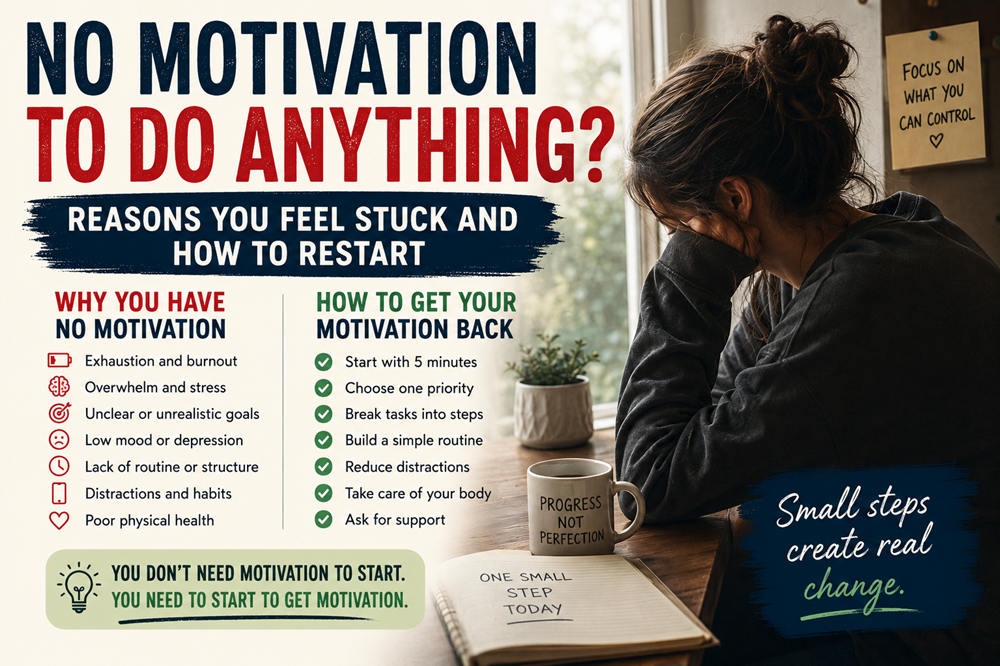
No Motivation to Do Anything? Reasons You Feel Stuck and How to Restart
Having no motivation to do anything can make even basic tasks feel exhausting. You may want to work, clean, exercise, answer messages, or take care of yourself, yet you cannot seem to begin.
This does not necessarily mean you are lazy. Motivation often drops when your energy is low, your mind is overloaded, or your goals feel too difficult. Understanding what is behind the feeling can help you choose a realistic way forward.
Why You Have No Motivation to Do Anything
Motivation is not controlled by willpower alone. Your sleep, stress level, physical health, emotions, habits, surroundings, and expectations all affect your ability to act.
Sometimes low motivation lasts only a day or two. In other cases, it continues because the real cause has not been addressed.
You Are Mentally or Physically Tired
Exhaustion is one of the most common reasons people lose motivation. You may be getting through work, family duties, school, appointments, and everyday decisions without giving yourself enough time to recover.
Mental exhaustion can feel just as heavy as physical tiredness. You might sit down to complete a simple task and discover that you cannot concentrate, make decisions, or care about the result.
When tiredness is the main issue, pushing harder may not help. You may need better sleep, regular meals, fewer commitments, or a genuine break from constant demands.
You Feel Overwhelmed
A long list of unfinished responsibilities can make it difficult to choose where to begin. Instead of completing one task, you think about all of them at once.
Laundry reminds you that the bedroom needs cleaning. Opening an email reminds you of several unanswered messages. Looking at one bill makes you think about your entire financial situation.
This mental pileup can lead to avoidance. Your brain treats the day as one enormous problem rather than a series of manageable actions.
Your Goals Are Too Vague or Too Large
Broad goals may sound inspiring, but they do not tell you what to do next.
Goals such as “get my life together,” “become healthier,” or “get organized” contain dozens of smaller decisions. When your energy is already low, those decisions can stop you before you begin.
A clear action is easier to follow:
- “Walk for ten minutes” is clearer than “get fit.”
- “Check my bank balance” is easier than “fix my finances.”
- “Clear the kitchen counter” is more manageable than “clean the house.”
- “Write the opening paragraph” is simpler than “finish the project.”
You may not lack motivation. You may simply lack a clear starting point.
You Are Afraid of Doing It Badly
Fear of failure can quietly look like low motivation. You delay beginning because you are worried about making a mistake, receiving criticism, or discovering that the task is harder than expected.
Avoiding the task brings temporary relief, but the pressure usually grows as the deadline gets closer.
Try treating the first attempt as a draft. You do not have to complete the task perfectly. You only need something you can improve.
Perfectionism Makes Every Task Feel Heavy
Perfectionism can turn small responsibilities into major projects.
You may feel that you need the right mood, enough time, complete information, and a perfect plan before you begin. Because those conditions rarely appear together, you continue waiting.
Lowering the standard does not mean you no longer care. It means you are choosing progress over unnecessary pressure.
A simple meal can still feed you. A short workout still counts as movement. A basic first draft still gives you something to work with.
You Have Lost Your Daily Structure
Routines reduce the number of decisions you need to make. Without a routine, you may spend much of the day deciding when to eat, work, exercise, rest, and sleep.
Irregular sleep, skipped meals, late starts, and long periods of scrolling can make your days feel directionless. The less structure you have, the easier it becomes to postpone everything until later.
You do not need to schedule every hour. A few dependable habits can give your day enough shape to make starting easier.
Your Environment Is Working Against You
Your surroundings can create extra effort before a task even begins.
You may avoid working because your desk is cluttered. You may skip a walk because your shoes are difficult to find. You may struggle to focus because your phone is constantly within reach.
Look for repeated obstacles rather than trying to redesign your whole space. Removing one distraction or preparing one item in advance can make a noticeable difference.
You May Be Burned Out
Burnout can develop after a long period of pressure, overwork, emotional strain, or caregiving. It often causes exhaustion, irritability, reduced performance, and emotional distance from responsibilities that once felt manageable.
Burnout is not always fixed by taking one day off. Recovery may require stronger boundaries, fewer responsibilities, more support, or changes to the situation causing the stress.
If you feel better when you are away from a particular job, role, or responsibility but quickly feel drained when you return, burnout may be part of the problem.
Your Physical Health May Be Affecting Your Energy
Low motivation is not always psychological. Poor sleep, illness, nutritional problems, chronic pain, hormone changes, and medication side effects may affect your energy and concentration.
Pay attention to sudden or unexplained changes. If you are unusually tired, weak, unfocused, or unable to manage everyday activities, consider speaking with a healthcare professional.
Low Motivation Can Be Connected to Depression
Everyone has unproductive days, but persistent low motivation can sometimes be one of the signs of depression or another mental-health concern.
Other signs may include:
- Losing interest in things you usually enjoy
- Feeling empty, hopeless, or unusually irritable
- Sleeping much more or less than usual
- Experiencing changes in appetite
- Withdrawing from friends and family
- Struggling to concentrate or make decisions
- Finding basic self-care difficult
Consider seeking professional support when these symptoms last for two weeks or longer, affect several areas of your life, or continue getting worse.
If you feel that you may harm yourself or cannot stay safe, contact emergency services. In the United States and its territories, you can also call, text, or chat with the 988 Suicide & Crisis Lifeline for free, confidential support.
How to Get Your Motivation Back
You do not have to wait until you feel inspired. Motivation often develops after you begin moving, not before.
The aim is not to force yourself through a long list. It is to make one useful action simple enough to start.
Begin With Five Minutes
Choose one task and work on it for five minutes. When the timer ends, you can continue or stop.
Good five-minute tasks include:
- Washing a few dishes
- Answering one email
- Folding several clothes
- Reading one page
- Walking outside
- Clearing part of your desk
- Writing a rough opening sentence
A short time limit makes the task feel contained. You are not promising to finish everything. You are only giving the task five minutes of your attention.
Choose One Clear Priority
Trying to fix several areas of your life at once usually creates more pressure.
Ask yourself:
- What genuinely needs attention today?
- Which task is creating the most stress?
- What can I realistically finish?
- What would make tomorrow easier?
Choose one answer. Write it down and temporarily ignore less important tasks.
Having one priority does not mean the other responsibilities do not matter. It simply gives your attention somewhere useful to go.
Break the Task Into Smaller Steps
Large tasks often hide several smaller jobs.
Instead of writing “clean the bedroom,” divide it into:
- Throw away visible trash.
- Put dirty clothes in a basket.
- Make the bed.
- Clear one surface.
- Put five items away.
You can stop after any step. Completing part of a task is more useful than waiting for enough energy to do everything.
Create a Minimum-Day Routine
Some days will not support your normal routine. A minimum-day plan helps you meet your basic needs without expecting yourself to perform at your best.
Your minimum day might include:
- Drinking enough water
- Eating at least one balanced meal
- Brushing your teeth
- Taking prescribed medication
- Opening the curtains
- Spending a few minutes outside
- Completing one necessary task
- Going to bed at a reasonable time
This routine is not meant to be impressive. It is a safety net for days when your energy is low.
Make Starting More Convenient
Prepare your environment before motivation becomes an issue.
You could:
- Put your walking shoes beside the door.
- Open the document you need before taking a break.
- Keep simple meals available.
- Charge your phone outside the bedroom.
- Place cleaning supplies where you use them.
- Write tomorrow’s first task on a note.
Small preparations remove decisions and make the desired action easier to begin.
Protect Your Energy
Productivity advice will not help much if you are constantly running on empty.
Focus on four basic areas:
Sleep
Try to wake up at a similar time each day. A consistent wake-up time can be easier to maintain than forcing yourself to fall asleep at an exact hour. The National Heart, Lung, and Blood Institute also recommends following regular sleep and wake times as part of building healthier sleep habits.
Food and Water
Do not wait for enough energy to cook an ideal meal. Choose something simple that gives your body fuel.
Movement
You do not need a demanding workout. Stretching, walking around the block, or moving for a few minutes can help you feel less sluggish. Regular physical activity supports both physical and mental health, but you can begin with an amount that feels manageable.
Real Rest
Scrolling may distract you, but it does not always help you recover. Try resting without constant notifications, videos, or background noise.
Stop Using Shame as Motivation
Calling yourself lazy or useless may create a brief burst of pressure, but it usually makes avoidance worse.
Describe the problem more accurately:
- “I am overwhelmed.”
- “I am tired.”
- “I am afraid of making a mistake.”
- “This task is not clear enough.”
- “I need help deciding what comes first.”
Once you name the actual problem, you can respond to it. Shame gives you very little useful information.
Ask for Support
You do not need to wait until the situation becomes serious before talking to someone.
You could ask a friend, partner, coworker, or family member to:
- Help you choose your first task
- Work beside you
- Take a short walk with you
- Check in after you begin
- Help with one responsibility
Support should make the task feel lighter, not create more pressure.
If low motivation is affecting your health, work, relationships, or ability to care for yourself, speaking with a therapist or doctor may also help you identify the cause.
A Simple Reset for a Difficult Day
When everything feels like too much, try this:
- Drink some water.
- Eat something simple.
- Wash your face or take a shower.
- Open a window or step outside.
- Write down what is worrying you.
- Choose one task that takes five minutes.
- Complete it or make a clear start.
- Decide whether you need another task, rest, or support.
You do not need to complete the whole list. Use the steps that match what you need.
Frequently Asked Questions
Why Do I Feel Motivated at Night but Not During the Day?
At night, there may be fewer demands, interruptions, and expectations. Planning tomorrow can feel easier than taking action during a busy day. Choose one small task the night before and prepare everything needed to begin it.
Can Too Much Phone Use Reduce Motivation?
Constant notifications and short bursts of entertainment can make slower activities feel less appealing. Try placing your phone outside your reach for ten minutes while you begin an important task.
Why Do I Lose Motivation After Making a Plan?
Your plan may be too ambitious or depend on having more energy than you usually have. Reduce the number of tasks and make the first action specific.
How Long Does Low Motivation Last?
There is no fixed timeline. Motivation may return after sleep, rest, or a stressful period. Seek support if it continues for several weeks, affects most parts of your life, or comes with other concerning emotional or physical symptoms.
Start With What You Can Manage
You do not need to rescue the entire day. Choose one action that supports your body, your space, or your responsibilities.
Eat something. Answer one message. Put away a few items. Step outside for five minutes.
Motivation may not appear immediately, but a manageable action gives you somewhere to begin.