Examples of Material Culture and What Everyday Objects Reveal About Life in Society
Material culture is part of everyday life, whether you notice it or not. Your phone, clothes, furniture, car, kitchen utensils, and the buildings around you are all examples of material culture.
Put simply, material culture includes the physical objects people create, use, own, and give meaning to. These objects can be practical, decorative, religious, technological, or symbolic.
What Is Material Culture?
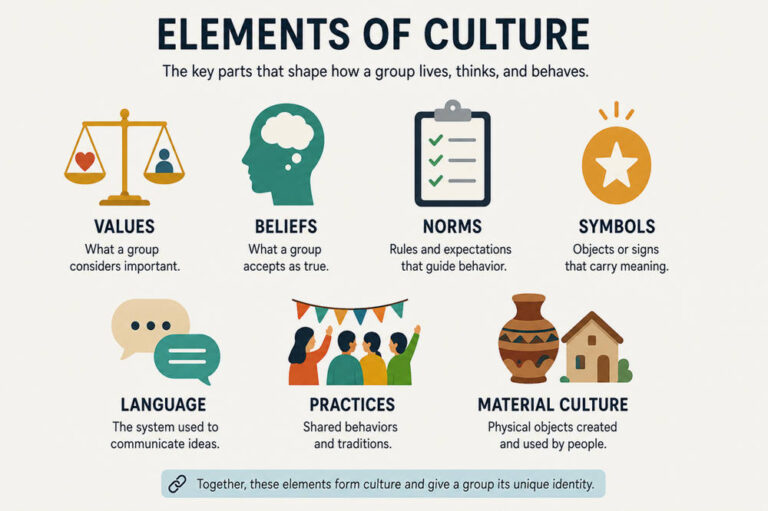
Material culture refers to the tangible parts of a culture—the things you can physically see or touch.
Examples range from simple household objects to large public buildings. A coffee mug, wedding ring, laptop, church, painting, bicycle, and pair of shoes can all qualify.
An object does not have to be old or displayed in a museum. Modern products are material culture too. Smartphones, gaming consoles, electric cars, and smartwatches are as relevant to today’s material culture as pottery and hand tools were to earlier societies.
Physical objects can also carry meanings beyond their basic purpose. A wedding ring is jewelry, for example, but it can also represent marriage and commitment. A sports jersey is clothing, but it can show loyalty to a team. This connection between material objects and nonmaterial cultural ideas is common throughout everyday life.
Examples of Material Culture
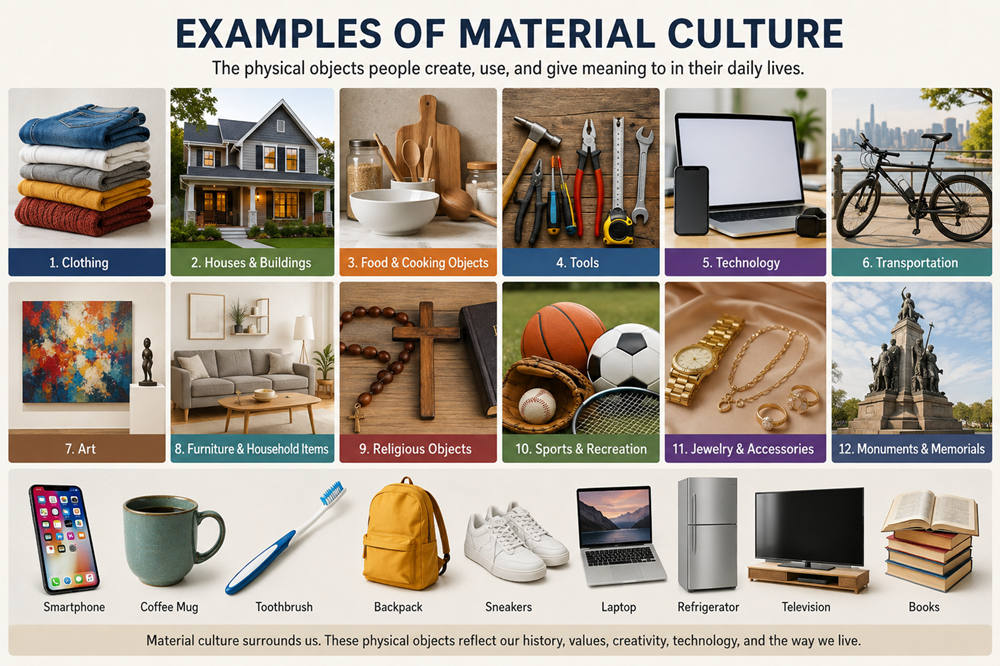
You can find material culture in nearly every area of life. Here are some of the most familiar examples.
1. Clothing
Clothing is one of the easiest forms of material culture to recognize.
Examples include:
- Jeans
- Dresses
- Business suits
- School uniforms
- Military uniforms
- Wedding dresses
- Sports jerseys
- Traditional clothing
- Religious clothing
Clothing can be practical while also expressing identity, occupation, social role, or tradition.
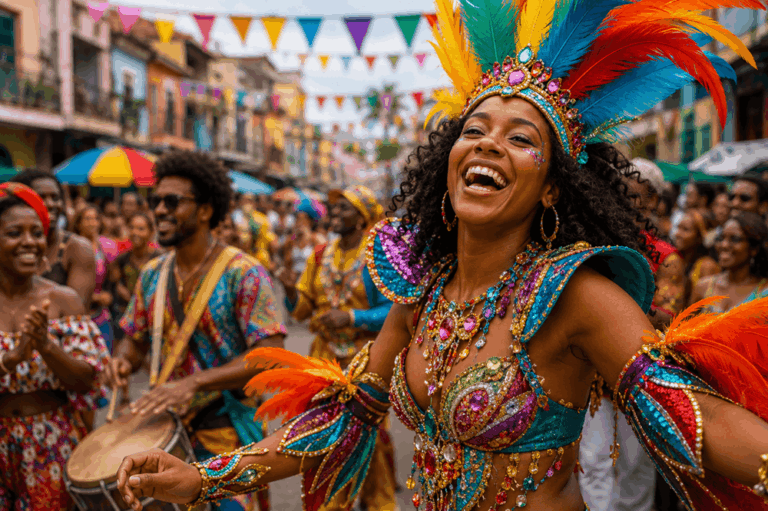
A police uniform identifies a profession. A graduation gown marks a particular event. Traditional clothing may be worn during festivals, ceremonies, or other important occasions.
Even everyday fashion changes with time, making old photographs and preserved garments useful records of earlier periods. Museum collections such as The Met’s Costume Institute also show how clothing can connect physical design with identity, status, belief, and belonging.
2. Houses and Buildings
Buildings are another clear form of material culture.
Examples include:
- Houses
- Apartment buildings
- Schools
- Libraries
- Hospitals
- Skyscrapers
- Churches
- Mosques
- Temples
- Stadiums
- Government buildings
Architecture often develops around people’s needs and available resources. Climate can influence building materials, while population density can affect whether people live in detached houses or high-rise apartments.
The inside of a building matters too. Kitchens, bedrooms, offices, elevators, garages, and communal spaces all show how people organize their surroundings.
3. Food and Cooking Objects
Objects used for preparing, serving, and eating food are part of material culture.
Common examples include:
- Plates
- Cups
- Bowls
- Forks
- Spoons
- Knives
- Chopsticks
- Cooking pots
- Pans
- Tea sets
- Coffee makers
- Grills
The physical item is material culture, while the customs surrounding its use are not.
For example, chopsticks are physical objects. Rules about when and how to use them are learned cultural practices.
This distinction helps explain why material culture and nonmaterial culture are often closely connected.
4. Tools
People have created tools for thousands of years, making them one of the oldest examples of material culture.
Examples include:
- Hammers
- Axes
- Knives
- Farming equipment
- Fishing equipment
- Sewing tools
- Construction tools
- Factory machinery
- Power tools
Tools usually develop to solve specific problems. Fishing communities may use nets, hooks, boats, and traps, while farming communities rely on equipment for planting, harvesting, and storing crops.
The Smithsonian’s research on early stone tools shows how physical tools can provide evidence about technology and everyday activities far into the human past.
Modern workplaces have their own tools as well, ranging from drills and forklifts to computers and laboratory equipment.
5. Technology
Technology provides many familiar examples of modern material culture.
These include:
- Smartphones
- Computers
- Tablets
- Televisions
- Cameras
- Gaming consoles
- Smartwatches
- Headphones
- Speakers
- Printers
A smartphone may seem ordinary now, but it says a great deal about modern daily life. One small device can be used for communication, entertainment, banking, photography, shopping, navigation, and work.
Older technologies also belong to material culture. Typewriters, cassette players, film cameras, pagers, and rotary phones are physical reminders of how technology has changed.
6. Transportation
Vehicles and transportation equipment are material culture too.
Examples include:
- Cars
- Bicycles
- Motorcycles
- Buses
- Trains
- Boats
- Airplanes
- Scooters
Different forms of transportation develop according to geography, technology, infrastructure, and everyday needs.
Transportation can also become part of personal identity. Someone may own a motorcycle because riding is an important hobby, while another person may choose a bicycle as their main way of traveling around a city.
7. Art
Physical works of art are classic examples of material culture.
They include:
- Paintings
- Sculptures
- Pottery
- Carvings
- Murals
- Ceramics
- Decorative textiles
- Handmade crafts
Art does not need to be displayed in a formal gallery. A hand-painted bowl, carved wooden figure, handmade quilt, or mural on a neighborhood wall can all be part of material culture.
Some artistic objects are mainly decorative, while others have practical, religious, or ceremonial uses. Museum collections often preserve these objects alongside information about where they came from and how they were used. The Smithsonian’s anthropology collections include artifacts studied in connection with history, art, cultural practices, and community traditions.
8. Furniture and Household Items
Your home is probably filled with material culture.
Common household examples include:
- Beds
- Sofas
- Tables
- Chairs
- Lamps
- Cabinets
- Rugs
- Refrigerators
- Washing machines
- Televisions
- Dishes
- Mirrors
Ordinary household objects change along with technology and lifestyles.
A kitchen from the 1920s, for example, looks very different from a modern kitchen filled with electric appliances. Furniture styles also change, leaving recognizable designs associated with particular decades.
9. Religious Objects
Physical objects used in religious practice can be forms of material culture.
Examples may include:
- Crosses
- Prayer beads
- Prayer rugs
- Religious statues
- Candles
- Altars
- Ceremonial clothing
- Ritual vessels
- Religious artwork
The object itself is material culture. The belief attached to it is nonmaterial.
A religious statue, for example, is physically made from materials such as stone, wood, or metal. Its spiritual significance comes from the beliefs and traditions associated with it.
10. Sports and Recreation Equipment
Objects used for sports, games, music, and hobbies also count as material culture.
Examples include:
- Footballs
- Basketballs
- Baseball bats
- Skateboards
- Surfboards
- Golf clubs
- Playing cards
- Board games
- Musical instruments
- Video game consoles
These objects often become closely connected with popular activities.
Sports equipment can even become symbolic. A signed baseball or championship trophy may have far more meaning to its owner than its basic materials would suggest. Physical objects such as trophies and medals can function both as material objects and as cultural symbols.
11. Jewelry and Personal Accessories
Jewelry and accessories are small objects that can carry significant meaning.
Examples include:
- Wedding rings
- Necklaces
- Bracelets
- Earrings
- Watches
- Handbags
- Brooches
- Hair ornaments
Some pieces are worn mainly for decoration. Others may show relationship status, wealth, religious affiliation, family history, or membership in a particular group.
Jewelry can also be passed from one generation to another, turning an ordinary possession into a family keepsake.
12. Monuments and Memorials
Public monuments are another recognizable type of material culture.
Examples include:
- Statues
- War memorials
- Memorial walls
- Historic monuments
- Gravestones
- Commemorative plaques
These objects are usually created to remember a person, event, group, or historical period.
Their meaning can change over time. A monument that one generation celebrates may be questioned or interpreted differently by another.
Everyday Examples of Material Culture Around You
You do not need to visit an archaeological site to find material culture. Look around your home, workplace, school, or neighborhood.
You may see:
- Smartphone
- Coffee mug
- Toothbrush
- Backpack
- Sneakers
- Laptop
- Refrigerator
- Television
- Couch
- Books
- Bicycle
- Family photographs
- Kitchen utensils
- Wall decorations
- Jewelry
Something as simple as a toothbrush counts because it is a physical object designed and manufactured for a particular purpose.
Even its design changes over time. Handles, bristles, packaging, electric models, and other features reflect changing technology and consumer habits.
How Material Culture Reflects Society
Material culture gives you physical evidence of how people live.
A collection of objects may provide clues about subjects such as:
- Work
- Technology
- Religion
- Transportation
- Food preparation
- Entertainment
- Housing
- Fashion
- Social status
- Family life
Consider a modern bedroom containing a smartphone, laptop, television, sneakers, headphones, furniture, books, and photographs. Each item is fairly ordinary by itself.
Together, however, they paint a recognizable picture of contemporary life.
This is one reason physical artifacts are important to archaeologists and anthropologists. Objects left behind can provide evidence about people who are no longer available to describe their lives themselves.
How Material Culture Changes Over Time
Material culture is constantly changing.
You can see this clearly by comparing familiar objects from different generations:
- Landline phones became smartphones.
- Paper maps gave way to GPS devices and navigation apps.
- Typewriters were largely replaced by computers.
- Film cameras gave way to digital cameras and phone cameras.
- Cassette players were replaced by newer music devices.
- Older household appliances developed into programmable and smart appliances.
New objects do not always eliminate old ones. Vinyl records, printed books, mechanical watches, and vintage furniture remain popular even though newer alternatives exist.
Some objects also take on new roles as they age. A telephone that was once an ordinary household item may eventually become a collectible or museum piece.
Changes in technology can happen faster than changes in beliefs or social practices surrounding that technology, a pattern sociologists discuss when examining cultural change and culture lag.
Material Culture Is Part of Everyday Life
Material culture is not limited to famous artifacts or historical objects. It includes the physical things people surround themselves with every day.
Clothing, buildings, tools, phones, furniture, vehicles, art, jewelry, cooking equipment, religious objects, and sports gear are all examples of material culture.
Looking at these objects helps you see culture in a practical way: not only through what people believe or do, but through the physical world they create and use.