
15 Examples of Teamwork in the Workplace—and Why They Work
Examples of teamwork include dividing a project according to people’s strengths, sharing important information during a handoff, raising concerns before they become serious problems, helping an overloaded colleague, and reviewing completed work together.
These actions may seem ordinary, but they show what teamwork actually involves: people coordinating different contributions toward a shared result. The following examples illustrate how that coordination works in a range of workplace situations.
What Counts as Genuine Teamwork?
Working near other people does not automatically make someone part of an effective team. A group can attend the same meetings and report to the same manager while completing mostly independent tasks.
Genuine teamwork usually involves three basic elements:
- A shared goal: Members understand what they are trying to achieve together.
- Connected responsibilities: Each person knows what to do and how that work affects others.
- Mutual accountability: People take responsibility for their own contributions while paying attention to the final result.
Team members do not need identical skills or opinions. Their differences can be valuable when the group coordinates them productively.
Planning and Coordinating Work
1. Dividing a Project According to Each Person’s Strengths
A team preparing a client proposal assigns industry research to someone familiar with the market, financial estimates to a colleague with relevant expertise, and the final presentation to a strong designer. The group then reviews the complete proposal together.
The work is not divided randomly or equally for appearance’s sake. Responsibilities reflect the knowledge required, while the final review ensures that the separate contributions form one consistent proposal.
2. Creating a Shared Plan Before Work Begins
Before starting a project, the team agrees on its objective, major deadlines, individual responsibilities, and approval process. Members also identify which tasks cannot begin until earlier work is completed.
This initial alignment prevents duplicated effort and overlooked responsibilities. It also helps people recognize when a delay in one part of the project will affect the rest of the group.
3. Coordinating a Cross-Departmental Product Launch
A product launch may require developers to finish the product, marketers to prepare a campaign, sales representatives to learn its features, and customer support employees to anticipate questions.
Each department has different priorities, but none can succeed in isolation. Marketing needs accurate product information, support teams need to understand known limitations, and everyone must adjust if the launch schedule changes.
4. Managing a Smooth Handoff
A nurse ending a shift explains a patient’s recent changes to the incoming nurse. A restaurant supervisor records unresolved customer issues for the evening team. An account manager transferring a client shares the relationship history, current priorities, and previous commitments.
A reliable handoff allows the next person to continue without reconstructing missing information. It protects the quality of the work even when responsibility moves from one employee to another.
Communicating and Supporting One Another
5. Listening to a Quieter Team Member’s Concern
Most of a project team supports an ambitious delivery schedule, but one employee is concerned that a supplier cannot meet it. Instead of moving ahead immediately, the group asks the employee to explain the risk and checks the supplier’s capacity.
The concern may not change the final decision, but considering it helps the team avoid overlooking relevant information. People are more likely to raise questions, share different viewpoints, or acknowledge mistakes when they experience psychological safety rather than expecting ridicule or punishment.
6. Giving Constructive Feedback
A colleague reviewing a report notices that one section could confuse its intended audience. Rather than describing the entire report as poor, the colleague identifies the difficult passage, explains the likely misunderstanding, and suggests a clearer structure.
Useful feedback focuses on improving the work rather than attacking the person who produced it. The recipient also contributes by considering the suggestion openly and asking questions when clarification is needed.
7. Helping a Colleague Manage an Unexpected Workload
An employee becomes unavailable shortly before an important deadline. The team identifies the most urgent responsibilities, postpones lower-priority work, and temporarily redistributes essential tasks.
The group also communicates honestly about what can still be completed. This prevents well-intentioned support from turning into unrealistic promises or excessive pressure on everyone else.
Occasional backup is healthy teamwork. Continually covering another person’s responsibilities without addressing the cause, however, can create resentment and hide performance problems.
8. Helping a New Employee Learn the Work
A manager provides formal training, while other team members explain daily procedures, introduce important contacts, and answer practical questions. They also share context that may not appear in an employee handbook.
For example, a colleague might explain why another department needs requests submitted in a particular format or which information should accompany a customer complaint. Shared onboarding helps a new employee contribute sooner and prevents important knowledge from remaining with one person.
Solving Problems and Making Decisions
9. Combining Different Areas of Expertise
Customer complaints about a service are increasing. Technical employees examine the system, customer support identifies recurring complaints, sales explains what clients were promised, and operations reviews how the service is delivered.
No participant initially has a complete view. By combining their information, the group may discover that the system works correctly but that customers are receiving unclear instructions.
This approach is especially useful when a problem crosses departments or professional specialties. It reduces the risk of accepting the first plausible explanation without examining the wider process.
10. Disagreeing Without Making the Conflict Personal
Two employees recommend different approaches to a project. Instead of questioning each other’s motives or competence, they compare costs, evidence, risks, and likely outcomes.
The team may select one proposal, combine parts of both, or run a small test before committing. Constructive disagreement improves decisions when people challenge assumptions without attacking the colleagues who raised them.
Once a decision is made, members support its implementation unless meaningful new evidence justifies reconsidering it.
11. Responding Together to an Urgent Problem
A company experiences a service outage affecting customers. One employee investigates the technical cause, another prepares customer updates, a third records decisions, and a team leader coordinates priorities.
Everyone uses the same source of information so that employees do not act on conflicting updates. Responsibilities remain clear, but members adjust quickly as new problems emerge.
During an emergency, teamwork depends less on individual heroics than on calm communication, reliable information, and clear allocation of urgent tasks.
12. Reviewing a Completed Project
After finishing a project, the team discusses what worked, where delays occurred, and which assumptions turned out to be wrong. Members concentrate on the process rather than searching for someone to blame.
A useful review leads to specific adjustments. The team might involve a specialist earlier, shorten an approval chain, improve testing, or change how progress is reported.
Regular team reflection can support performance, although its benefits may vary with the size of the team and how long its members have worked together.
Adapting to Changing Conditions
13. Collaborating Across Different Time Zones
A distributed team cannot expect everyone to work at the same time. Members document decisions, update shared project records, and leave clear notes for colleagues beginning work in another location.
Meetings are reserved for discussions that genuinely require simultaneous participation. Routine updates are handled in writing so that work can continue without forcing employees to remain constantly available.
14. Adjusting the Plan When Priorities Change
Halfway through a project, a client changes an important requirement. The team reviews how the change affects its objective, workload, budget, and deadline before assigning new tasks.
Some completed work may remain useful, while other activities may no longer be necessary. Revising the plan together prevents employees from making isolated changes that conflict with one another.
Adaptability is not simply changing quickly. It means reconnecting everyone’s work to the revised goal.
15. Sharing Credit and Responsibility
After a successful project, the team acknowledges the people who contributed research, technical knowledge, administration, customer communication, and other less visible work. The person presenting the result does not claim the achievement as an individual victory.
If the project performs poorly, members examine both individual decisions and wider problems such as unclear expectations, missing information, inadequate resources, or weak coordination.
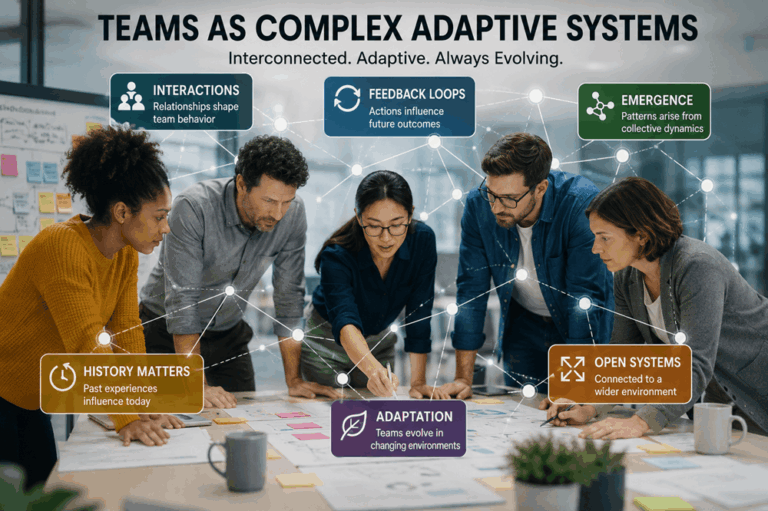
Shared responsibility does not remove personal accountability. It recognizes that results are usually shaped by an interconnected system of people and decisions.
What These Examples Have in Common
Although the situations differ, effective teamwork usually includes five recurring patterns:
- A clear objective: People understand the outcome they are working toward.
- Interdependent roles: Individual responsibilities are defined but connected.
- Timely information sharing: Relevant updates, concerns, and decisions reach the people who need them.
- Constructive discussion: Members can ask questions and challenge ideas without making disagreements personal.
- Dependability and accountability: People follow through, communicate problems, support colleagues, and remain responsible for their contributions.
Reflection also matters. Teams become more effective when they examine completed work and make practical changes instead of repeating the same processes automatically.
High-performing teams tend to combine psychological safety, shared thinking, information sharing, cohesion, and opportunities to reflect on how the work is progressing.
Google’s internal Project Aristotle study identified psychological safety, dependability, structure and clarity, meaning, and impact as five important team dynamics. Because the findings came from teams within Google, they should not be treated as a universal formula, but they provide a useful framework for examining how members work together.
Conclusion
Teamwork is visible in ordinary actions: creating a shared plan, transferring information carefully, listening to concerns, supporting a colleague during a difficult period, resolving disagreement, and learning from completed work.
The clearest test is not whether colleagues appear friendly or busy. It is whether they understand the goal, coordinate their responsibilities, exchange the information they need, follow through on commitments, and respond constructively when circumstances change.