
15 Leadership Speakers Who Bring Practical Ideas to the Stage
A leadership speaker should offer more than an hour of encouragement. A worthwhile talk gives people a clearer way to understand a workplace problem, discuss it with others, and make better decisions once the event is over.
The speakers below draw from organizational research, executive leadership, military experience, public service, management practice, and social advocacy. They are arranged loosely from broad questions of purpose and courage to team performance, communication, strategy, adaptability, and structural change.
This is not a ranking, and speaker availability can change. The right choice depends less on fame than on whether the speaker’s ideas match the people in the room and the result the event is meant to produce.
How These Leadership Speakers Were Selected
The list favors speakers with a recognizable body of work rather than a single popular presentation. Each person brings a distinct framework, research area, or leadership experience that can support a substantive workplace discussion.
Credibility can come from different places. Some speakers have conducted academic research, while others have led global companies, advised executives, commanded complex organizations, or built influential social movements. What matters is that their central ideas are grounded in more than motivational language.
The selection also reflects the range of problems leaders face. Purpose, psychological safety, feedback, motivation, organizational health, strategic change, professional influence, and inclusion are related, but they are not interchangeable. An event becomes more useful when organizers identify the specific issue they want a speaker to address.
15 Leadership Speakers to Know
1. Simon Sinek — Purpose, Trust, and Organizational Culture
Simon Sinek is closely associated with purpose-led leadership and the question of why an organization’s work matters. His broader work also examines trust, cooperation, employee well-being, and the difference between competing for short-term wins and building an organization that can endure.
His ideas are accessible because they give leaders a simple language for discussing beliefs that can otherwise feel abstract. A presentation centered on purpose is most valuable when an organization is prepared to connect that purpose to real priorities, tradeoffs, and everyday behavior rather than treating it as a slogan.
2. Brené Brown — Courage and Vulnerable Leadership
Brené Brown brings research on courage, vulnerability, shame, and empathy into leadership conversations. Her work challenges the belief that authority requires leaders to appear certain and emotionally protected at all times.
Vulnerability in this context does not mean sharing every private feeling or lowering expectations. It means accepting the interpersonal risk involved in admitting uncertainty, hearing criticism, addressing conflict, and taking responsibility for difficult decisions. Brown’s perspective is especially useful when defensive behavior is preventing honesty or trust.
3. Adam Grant — Motivation, Generosity, and Rethinking Work
Organizational psychologist Adam Grant studies how people find motivation and meaning, question assumptions, develop potential, and contribute to more generous and creative workplaces. He often uses behavioral research to examine familiar problems such as resistance to new ideas, disagreement, collaboration, and professional growth.
One of the most useful themes in Grant’s work is the need to reconsider established beliefs without abandoning judgment. Leaders can become attached to methods that previously worked, even when new evidence suggests that circumstances have changed. His talks can create a productive starting point for conversations about innovation, learning, and intellectual humility.
4. Amy C. Edmondson — Psychological Safety and Learning
Amy C. Edmondson is a Harvard Business School professor whose research includes psychological safety, teaming, organizational learning, and failure. Psychological safety exists when people believe they can ask questions, acknowledge mistakes, or raise concerns without being punished for reasonable interpersonal risk.
The idea is sometimes misunderstood as an attempt to make work comfortable or remove performance standards. Edmondson instead connects psychological safety with learning and responsible candor. Teams still need accountability, but they are less likely to detect problems when employees believe that silence is safer than speaking.
5. Liz Wiseman — Developing the Intelligence of Others
Liz Wiseman’s Multipliers framework examines whether leaders expand or diminish the intelligence around them. A leader can be highly capable and well intentioned while still dominating discussions, answering every question, or becoming the person everyone waits for before acting.
Wiseman’s work redirects attention from how much a leader personally knows to how effectively that leader uses the abilities of others. The goal is not passive management. Multiplying leaders set demanding expectations, but they also create enough space for employees to think, make judgments, and develop confidence through responsibility.
6. Patrick Lencioni — Team Health and Organizational Alignment
Patrick Lencioni writes and speaks about teamwork, leadership, culture, and organizational health. His frameworks address trust, productive conflict, commitment, accountability, clarity, and the tendency of leadership teams to avoid uncomfortable issues.
His approach is practical because it treats team problems as observable patterns rather than vague personality conflicts. A group may appear polite while repeatedly postponing decisions, protecting departmental interests, or refusing to challenge weak ideas. Lencioni gives teams a vocabulary for identifying those behaviors and discussing what must change.
7. Kim Scott — Direct Feedback and Respectful Leadership
Kim Scott developed Radical Candor as a way to combine direct challenge with genuine concern for another person. The framework addresses two common failures: avoiding useful feedback to preserve short-term harmony and delivering criticism without sufficient respect for the person receiving it.
Scott’s later work on Radical Respect broadens the discussion to collaboration, bias, and workplace relationships. Together, these ideas can help managers examine not only what they say during formal reviews but also how they respond to mistakes, disagreement, uneven performance, and exclusion in everyday work.
8. Marcus Buckingham — Strengths-Based Leadership
Marcus Buckingham’s work focuses on strengths, human performance, employee engagement, and the design of work. He challenges standardized approaches that assume every employee should be managed, motivated, and developed in essentially the same way.
A strengths-based approach does not require leaders to overlook poor performance or eliminate necessary responsibilities. It asks them to understand where each person contributes unusual value and how roles can make better use of that ability. The idea is particularly relevant to managers trying to develop people without forcing everyone toward an identical model of excellence.
9. Daniel Pink — Motivation and Human Behavior
Daniel Pink translates research about motivation, creativity, timing, persuasion, regret, and human behavior into practical ideas. His work on motivation is widely associated with autonomy, mastery, and purpose, particularly in work that requires judgment and initiative rather than simple compliance.
Pink’s value as a speaker comes from his ability to begin with a broad behavioral question and show how it appears in ordinary decisions. His material can move a leadership event beyond the assumption that better performance always requires a larger reward, stricter monitoring, or a more forceful message.
10. Indra Nooyi — Strategic and Global Leadership
Indra Nooyi served as chairman and CEO of PepsiCo and was the chief architect of its Performance with Purpose strategy. Her experience provides a view of leadership shaped by global operations, changing consumer expectations, long-term investment, and the pressure to produce results while transforming a large company.
Nooyi also speaks and writes about career development, family responsibilities, women in leadership, and the difficult choices that accompany senior roles. That combination gives her perspective greater range than a conventional account of corporate success. It connects strategy with the personal and social conditions under which executives make decisions.
11. Stanley McChrystal — Adaptability and Distributed Leadership
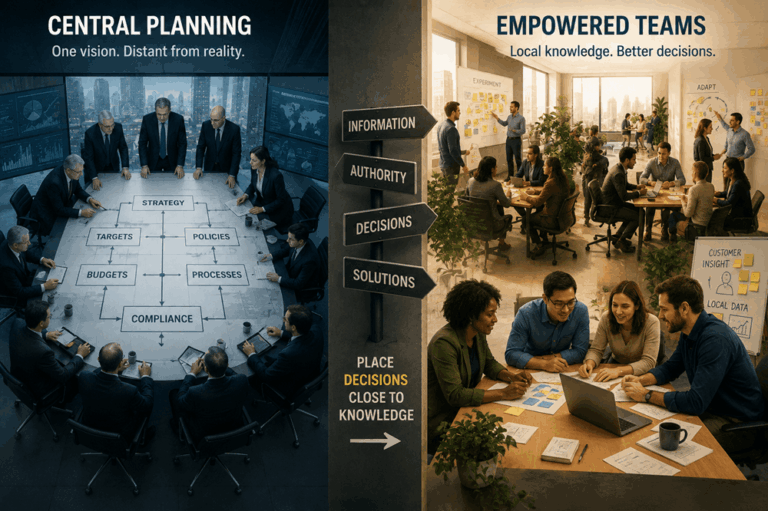
Retired General Stanley McChrystal applies lessons from military command to organizational complexity, communication, and decentralized decision-making. His Team of Teams framework argues that traditional command-and-control structures can become too slow when conditions change faster than information can travel through a hierarchy.
The alternative is not an organization without structure. It is a network held together by common purpose, trust, shared awareness, and the authority to act. McChrystal’s work is particularly relevant to leaders facing silos, delayed decisions, or situations in which no single person can possess all the information needed to respond effectively.
12. Carla Harris — Influence, Sponsorship, and Career Growth
Carla Harris is a senior client advisor and former vice chairman at Morgan Stanley. Her leadership guidance often explores performance, professional reputation, relationship building, authenticity, sponsorship, and the informal factors that influence advancement.
A central strength of her message is the distinction between doing excellent work and having someone advocate for that work when important decisions are made. This helps organizations discuss career progression more honestly. Individual effort matters, but access, visibility, trust, and sponsorship also affect who receives opportunities to lead.
13. Jacinda Ardern — Empathy and Leadership Under Pressure
Former New Zealand prime minister Jacinda Ardern has become closely associated with the idea that empathy and kindness can coexist with authority. Her leadership experience included national crises, public scrutiny, political division, and decisions that had to be explained under intense pressure.
The most useful discussion around her approach is not whether leaders should simply be “nicer.” It is how emotional awareness can improve communication, public trust, and the ability to recognize the human consequences of a decision. Her work at Harvard has also explored empathetic leadership across political, ideological, and cultural differences.
14. David Burkus — Collaboration and High-Performing Teams
David Burkus is an organizational psychologist, author, keynote speaker, and part-time lecturer at Columbia University. His work focuses on how leaders build trust, strengthen collaboration, create belonging, and improve team performance.
Burkus is useful for audiences that want research-informed guidance without an overly academic presentation. His work examines the social conditions behind performance, including whether employees understand the team’s purpose, trust one another’s intentions, and feel connected enough to coordinate their efforts.
15. Reshma Saujani — Courage and Structural Workplace Change
Reshma Saujani is the founder of Girls Who Code and the founder and CEO of Moms First. Her work addresses women’s economic empowerment, gender inequality in technology, caregiving, paid leave, child care, and the workplace systems that shape who can participate and advance.
Saujani’s message extends beyond encouraging individuals to become more confident or fearless. She also asks organizations to examine barriers that personal determination cannot remove. That distinction makes her contribution valuable in leadership discussions that might otherwise place the entire responsibility for unequal outcomes on the people experiencing them.
How to Choose the Right Leadership Speaker
Start With the Leadership Problem
Do not begin with a list of famous names. Begin with the issue the event needs to address. It may be weak communication, low trust, executive misalignment, poor feedback, resistance to change, or uncertainty about the organization’s direction.
Turn that issue into a concrete outcome. “Motivate the team” is too broad to guide a useful decision. “Help managers address performance concerns earlier and more constructively” gives organizers a clearer basis for evaluating speakers.
Consider the Audience’s Responsibilities
A first-time manager, experienced executive, nonprofit director, educator, and project leader may all be interested in leadership, but they do not need the same presentation. Review the audience’s level of experience, decision-making authority, familiarity with the subject, and ability to apply the speaker’s ideas.
Industry context matters too. Advice about experimentation, risk, or rapid decision-making must be framed differently in a software company than in healthcare, aviation, government, or another highly regulated setting.
Review the Substance, Not Just the Speaker Reel
Promotional videos are designed to show energy and audience response. They reveal less about whether the speaker can sustain an argument, explain a framework clearly, or handle complex questions.
Watch a complete talk or extended interview when possible. Look for evidence behind the central message, variation in the examples, and a clear connection between the speaker’s experience and the event’s purpose.
Choose the Right Format
A keynote works well when an event needs a shared idea or common language. A workshop creates more room for practice, discussion, and application. A moderated conversation may be more effective when the speaker’s experience and judgment are more valuable than a formal model.
Ask how much the presentation can be adapted. Customization should make the material more relevant, but it should not turn the speaker into a spokesperson for the organization. A credible speaker must retain enough independence to challenge the audience.
Confirm the Terms Clearly
Before signing an agreement, confirm the fee, travel costs, schedule, presentation length, technical requirements, accessibility arrangements, recording permissions, cancellation terms, and any additional appearances.
Provide accurate information about the audience and the wider program. A speaker can prepare more effectively when they understand what attendees have already heard, what the organization is facing, and how the talk fits into the event as a whole.
Final Thoughts
A leadership speaker should be selected for relevance, not recognition alone. The central question is whether the person has the experience or ideas needed to improve a particular conversation, decision, or behavior.
Once organizers define that need clearly, the list of possible speakers becomes easier to evaluate. The right person is the one whose message gives the audience something useful to examine together and apply to the work that follows.