Leadership Strategy and Tactics: How Leaders Turn Direction Into Action
Leadership involves deciding what a group needs to accomplish and helping people act on that direction. The first responsibility is strategic. The second is tactical.
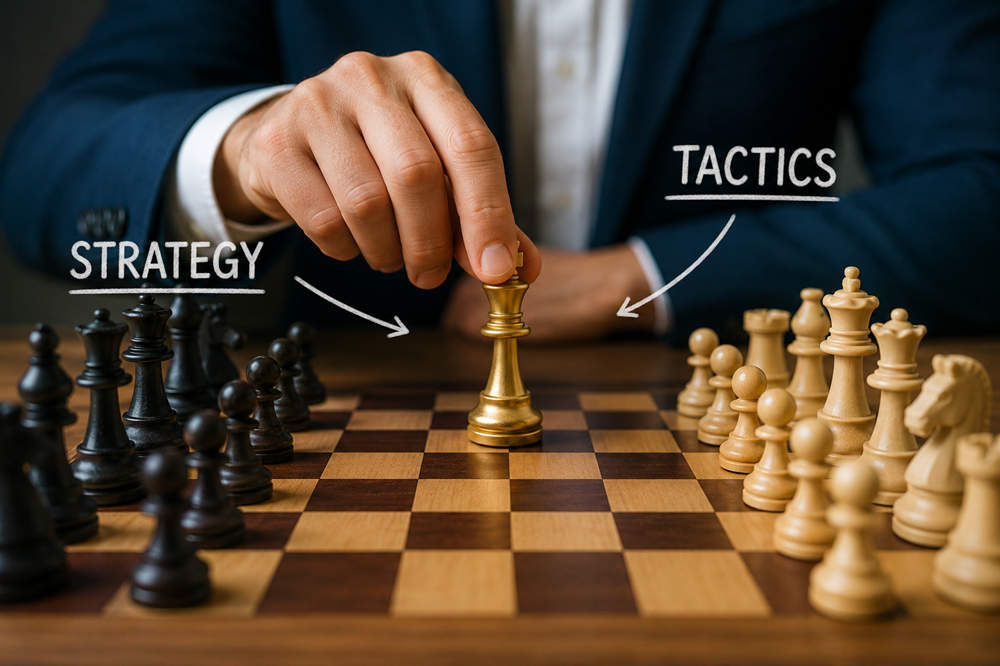
Strategy defines the outcome, priorities, and choices that guide the team. Tactics are the specific actions leaders use to move the work forward. Strong leadership connects the two so that daily decisions support a larger purpose.
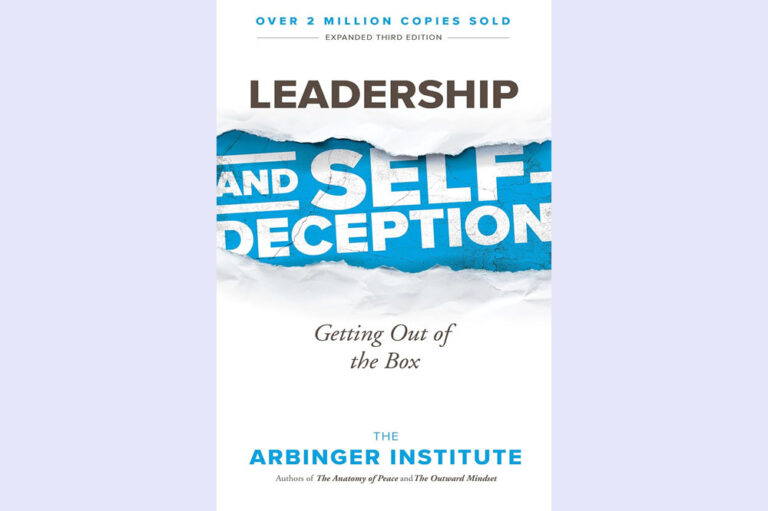
The phrase is also the title of Jocko Willink’s leadership field manual, which explores how leadership principles can be translated into practical action. In this article, however, leadership strategy and tactics refer more broadly to how leaders guide teams in workplace settings.
What Are Leadership Strategy and Tactics?
A leadership strategy is a set of deliberate choices about the result a leader wants to create, the priorities that will receive attention, and the capabilities needed to succeed.
It might focus on rebuilding customer trust, improving coordination between departments, preparing employees for greater responsibility, or helping a team respond to significant change. A useful strategy does more than describe an ambition. It gives people a basis for choosing among competing demands.
Leadership tactics are the actions used to carry out those choices. They include assigning responsibility, setting decision boundaries, providing feedback, resolving conflict, coaching employees, changing meeting structures, and adjusting workflows.
Suppose a leader wants to build a more accountable team. That is still only a broad intention. The strategy must identify the kind of accountability needed and the conditions that will support it. The tactics might then include clarifying ownership, reviewing commitments regularly, and giving employees greater authority over their work.
The strategy creates consistency among those actions. The tactics make the strategy visible in everyday behavior.
The Difference Between Leadership Strategy and Tactics
Strategy and tactics serve different functions. Strategy establishes the framework within which decisions are made. Tactics address a particular need, obstacle, or opportunity within that framework.
| Leadership strategy | Leadership tactics |
|---|---|
| Defines the broader outcome and approach | Specifies the actions used to create progress |
| Establishes priorities and trade-offs | Uses available people, time, and resources |
| Guides a series of related decisions | Responds to a defined situation or need |
| Usually changes when important assumptions change | Can be adjusted more readily through feedback |
| Measures movement toward a meaningful result | Measures the effect of a particular action |
The distinction is not simply long term versus short term. Some strategic decisions must be made quickly, while a tactic such as coaching may continue for months. The more important difference is scope: strategy determines the choices that organize the work, while tactics are the methods used within those choices.
A tactic may succeed without contributing to the strategy. A manager might reduce meeting times, complete a training program, or introduce new reporting software. Those actions can be executed well, but they only have strategic value if they help produce the intended outcome.
How Leaders Develop a Clear Strategy
A leadership strategy should help people understand what matters, where to concentrate their effort, and what they may need to stop doing. Developing one requires more than writing a vision statement.
Define a Meaningful Outcome
The leader should begin by describing what needs to be different. General aims such as “improve performance” or “strengthen the culture” are too broad to guide coordinated decisions.
A clearer outcome might be reducing preventable production delays, helping new employees become productive sooner, increasing customer retention, or preparing supervisors to lead larger teams.
The outcome does not need to predict every future detail. It needs to be specific enough that people can recognize progress and understand why the work matters.
Understand the Present Situation
A sound strategy reflects the conditions in which the team is operating. Leaders should examine current performance, employee capabilities, stakeholder expectations, available resources, operational constraints, and emerging risks.
They should also investigate the causes of the problem rather than responding only to its most visible symptoms. Poor collaboration, for example, could result from conflicting targets, unclear roles, missing information, or damaged working relationships. Each cause would point toward different strategic choices.
Employees close to the work are often essential sources of information. Their experience can reveal practical barriers that are not apparent in senior-level reports.
Choose Where to Concentrate
A strategy cannot give equal attention to every worthwhile goal. Leaders must decide which problems to address first, which capabilities to develop, and which activities will not receive resources.
This principle of making strategic trade-offs prevents the strategy from becoming a list of unrelated improvements. Choices create focus by establishing what the team will emphasize and what it will deliberately leave aside.
A service leader facing declining customer satisfaction might choose to simplify resolution processes and increase employee decision authority. That direction would exclude other activities that do not address the primary causes of poor service.
Match the Direction With Organizational Capacity
The chosen direction must be realistic in relation to the team’s skills, authority, time, systems, and resources. Leaders should identify what the group can already do and what must be strengthened before the strategy can succeed.
They must also ensure that managers interpret the direction consistently. Conflicting instructions from different leaders force employees to choose between priorities and weaken confidence in the strategy.
The Center for Creative Leadership describes effective group leadership through direction, alignment, and commitment. People need agreement about what they are trying to accomplish, coordination around the work, and a shared willingness to contribute to the result.
Translating Strategy Into Tactical Priorities
Once a direction has been chosen, leaders must make it usable. Employees need to know what the strategy changes about their responsibilities and which actions should come first.
- Convert the direction into a few priorities. Each priority should describe an important area of progress. A customer-service strategy, for example, might emphasize faster responses, stronger first-contact resolution, and easier access to accurate customer information.
- Assign ownership. Someone should be responsible for coordinating each priority, tracking progress, and raising issues that require a decision. Ownership does not mean doing all the work alone.
- Clarify decision authority. Employees should understand which choices they can make independently, when consultation is expected, and which decisions require approval.
- Set milestones. Shorter checkpoints allow leaders to examine progress before excessive time or resources have been committed. A milestone might involve completing a pilot, reaching an initial target, or gathering feedback from affected employees.
- Remove competing work. New priorities are not credible when every existing initiative continues unchanged. Leaders should identify tasks that can be delayed, reduced, combined, or stopped.
This translation process gives employees enough structure to act without turning the strategy into a rigid set of instructions. People can use the priorities to make informed decisions when leaders are not present.
Choosing the Right Leadership Tactics
The appropriate leadership tactic depends on the urgency of the work, the experience of the people involved, the level of risk, and the obstacle preventing progress. Leaders should select a response because it fits the situation, not because it matches their habitual style.
Direct the Team When Immediate Clarity Is Required
Direct instruction is useful during emergencies, serious performance failures, or unfamiliar tasks with little room for error. The leader states what must happen, assigns responsibility, and establishes a timeframe.
This approach should remove uncertainty rather than become a permanent system of control. Once the situation stabilizes, employees may need more room to exercise judgment.
Consult Employees When Their Knowledge Matters
People who work directly with customers, equipment, processes, or systems may understand a problem better than senior leaders do. Asking focused questions can uncover constraints, risks, and alternatives that would otherwise be missed.
Consultation is not the same as avoiding a decision. The leader remains responsible for determining how the information will be used and communicating what happens next.
Delegate When Someone Is Ready to Own the Result
Delegation is appropriate when an employee has enough skill and judgment to take responsibility for an outcome. The leader explains the expected result, relevant boundaries, available resources, and any required checkpoints.
Meaningful delegation gives the employee control over the method. Assigning a task while prescribing every step transfers work but not responsibility.
Coach When Capability Needs to Grow
Coaching helps an employee develop the judgment needed for future independence. Rather than immediately providing an answer, the leader helps the person examine the situation, evaluate options, and learn from the consequences of a decision.
This tactic may require more attention initially, but it can expand the team’s ability to handle difficult work without continual intervention.
Increase Feedback When the Work Is Uncertain
Experimental projects, organizational changes, and unfamiliar responsibilities often require shorter feedback cycles. Leaders may use brief reviews, demonstrations, operational data, or one-to-one conversations to identify problems early.
The feedback should improve the work rather than force employees to seek approval for every minor choice.
Intervene When Conflict Obstructs Coordination
Disagreement can strengthen a decision when people openly examine different evidence and viewpoints. Intervention becomes necessary when unresolved conflict prevents information sharing, cooperation, or the fulfillment of commitments.
The leader might clarify responsibilities, facilitate a discussion, address inappropriate conduct, or make a decision that allows the work to proceed.
Maintaining Direction While Adapting Tactics
Leaders need enough consistency to prevent confusion and enough flexibility to respond to evidence. This requires distinguishing between a weak tactic and a flawed strategy.
Evaluate Results Rather Than Activity Alone
Activity measures show what the team has completed. Outcome measures show whether those efforts are creating the intended change.
Training sessions, project meetings, process documents, and customer calls may all be useful. Their completion does not prove that performance, behavior, or customer experience has improved.
Leaders should therefore examine whether the work is moving the group toward the defined outcome rather than rewarding visible activity for its own sake.
Change the Method When the Direction Remains Sound
A tactic should be revised when it fails to produce progress but the broader outcome and strategic choices remain valid.
A leader might replace a large training event with coached assignments, simplify a reporting process, move a decision closer to frontline employees, or test an approach with one team before using it more widely.
Changing the method is not a sign of inconsistency. It prevents the organization from remaining committed to an ineffective action.
Revisit the Strategy When Its Assumptions No Longer Hold
A larger revision may be necessary when new evidence changes the nature of the challenge. Customer expectations, staffing levels, regulations, technology, financial conditions, or organizational responsibilities may shift enough to make the original direction impractical.
Strategic change should follow a meaningful change in circumstances or understanding. It should not be an automatic reaction to every delay or disappointing result.
Leadership Strategy and Tactics Example
Consider a hypothetical customer-support department in which satisfaction scores are falling and employees are becoming frustrated.
The Challenge
Customers are waiting too long for solutions because support employees must obtain approval for many common requests. Managers have responded by telling the team to work faster, but the approval structure continues to create delays.
The Strategy
The department leader defines the desired outcome as resolving more customer problems during the first interaction without weakening appropriate risk controls.
The leader chooses to concentrate on three areas: increasing employee authority for routine requests, improving access to customer information, and removing approval steps that do not manage a significant risk.
The Tactics
A small group of employees and managers reviews common causes of delay. The leader then establishes clearer decision boundaries, allowing support employees to approve defined solutions independently while unusual cases continue to receive management review.
Managers use short coaching sessions based on actual customer interactions to help employees exercise their expanded authority consistently.
Measurement and Adjustment
The department tracks first-contact resolution, repeat contacts, customer satisfaction, processing time, and escalations. Employee feedback is also reviewed to identify confusion in the new process.
The results show that one category of request continues to produce frequent mistakes. The leader adds guidance and narrows employee authority for that category without restoring unnecessary approvals elsewhere.
The tactic is adjusted in response to evidence, while the strategic direction remains unchanged.
Final Thoughts
Effective leaders do not choose between strategic thinking and tactical action. They make deliberate choices about the result, translate those choices into clear priorities and responsibilities, and adjust their methods as new information emerges. Strategy gives the work consistency, while tactical flexibility keeps it responsive to reality.