What Is Interpersonal Communication and Why Does It Matter in Everyday Life?
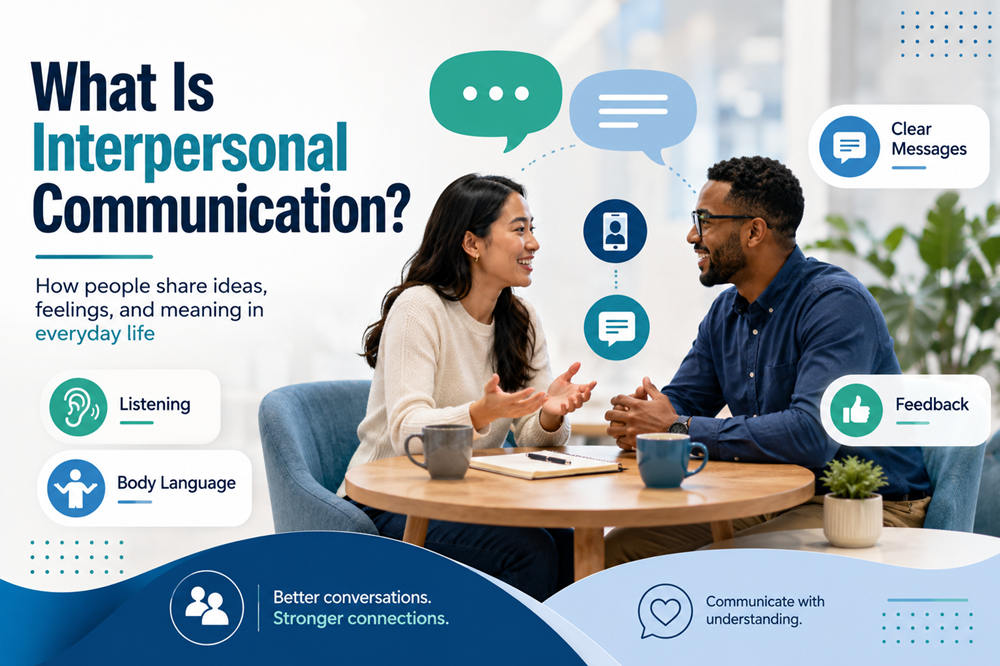
Interpersonal communication is the exchange of information, emotions, and ideas between people. It happens when you talk with a friend, ask a coworker for help, text a family member, or listen to someone explain a problem.
It includes more than spoken words. Your tone, facial expressions, body language, listening habits, and choice of communication method all shape how your message is understood.
What Is Interpersonal Communication?
Interpersonal communication happens when two or more people communicate directly with one another. It may take place face-to-face, over the phone, through a video call, or in writing.
The conversation can be formal or casual. A job interview, team meeting, family discussion, friendly chat, and customer service call are all examples.
Communication is successful when the people involved understand the message in roughly the way it was intended. However, misunderstandings can happen because people bring different emotions, experiences, expectations, and communication styles into every conversation.
For example, a short message such as “We need to talk” may seem neutral to the sender but alarming to the person receiving it. The words are simple, but the lack of context can change how they are interpreted.
How Interpersonal Communication Works
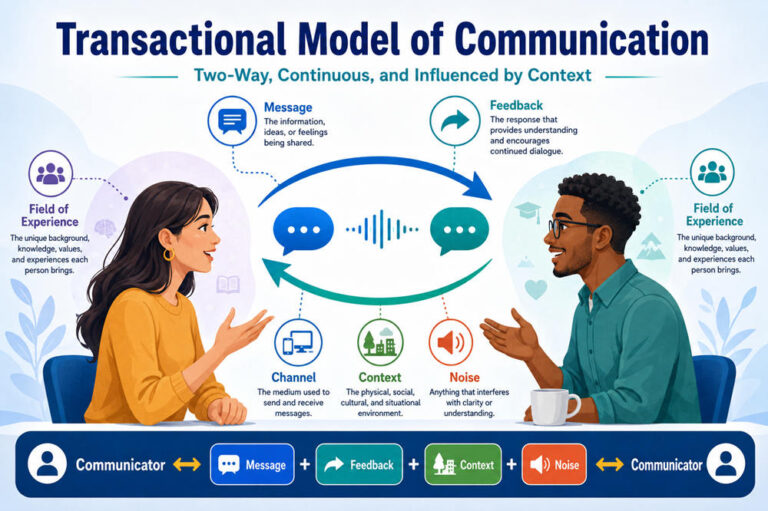
Interpersonal communication usually begins when one person shares a message and another person responds.
The message may include:
- Information
- A question
- A request
- An opinion
- An emotion
- A warning
- Feedback
The other person receives the message, interprets it, and gives feedback. That feedback might be a spoken reply, a facial expression, a gesture, or even silence.
Imagine that you ask a coworker, “Can you finish the report by Thursday?” Your coworker might agree, ask for more time, or look confused. Their response helps you understand whether the request was clear and realistic.
The setting also matters. A sensitive conversation held privately may feel respectful, while the same conversation in front of other people may feel embarrassing or confrontational.
Distractions can interfere with the exchange. Noise, stress, poor internet connections, vague wording, and divided attention can all make a clear conversation more difficult.
Types of Interpersonal Communication
Several forms of communication usually work together during an interaction.
Verbal Communication
Verbal communication involves spoken words. It includes everyday conversations, meetings, phone calls, interviews, presentations, and discussions.
The words you choose matter, but so does how you deliver them. Speaking calmly may make a request sound reasonable, while using an impatient tone can make the same request sound like criticism.
Clear verbal communication is direct and specific. Instead of telling someone, “Take care of that soon,” you could say, “Please send the completed form by 3 p.m. on Friday.”
Nonverbal Communication
Nonverbal communication is the information you share without relying only on words.
It includes:
- Facial expressions
- Eye contact
- Hand gestures
- Posture
- Physical distance
- Tone of voice
- Movement
- Silence
Your nonverbal signals can strengthen your message or contradict it. You may tell someone you are listening, but looking at your phone throughout the conversation suggests otherwise.
Nonverbal signals should not always be interpreted in isolation. Someone who avoids eye contact may be nervous, distracted, tired, or simply following a different cultural communication style.
Written Communication
Written interpersonal communication includes emails, text messages, letters, online chats, and workplace messaging platforms.
Writing is useful because it gives you time to organize your thoughts and creates a record of the conversation. However, written messages lack many of the signals found in face-to-face communication.
A short response such as “Fine” may sound annoyed even when the sender did not intend it that way. Adding context can make the message clearer: “That time works fine for me. I’ll see you then.”
Listening
Listening is an active part of communication, not simply remaining quiet while another person speaks.
Effective active listening means paying attention, allowing the speaker to finish, and trying to understand their meaning before responding. You may also ask questions or summarize what you heard.
For example, you might say, “So the main problem is that the deadline changed, but the workload stayed the same. Is that right?”
This gives the speaker an opportunity to confirm or correct your understanding.
Everyday Examples of Interpersonal Communication
Interpersonal communication appears in nearly every area of life.
Asking for Clarification at Work
Suppose your manager gives you an assignment but does not explain the expected format.
Instead of guessing, you could say:
“Should the final version be a written report or a presentation?”
This simple question reduces confusion and helps you complete the task correctly.
Setting a Personal Boundary
A friend repeatedly calls late at night when you are trying to sleep.
You could say:
“I care about what is happening, but I cannot take nonurgent calls after 10 p.m. Can we talk earlier in the evening?”
The message is direct without being insulting.
Giving Constructive Feedback
Telling someone, “This is bad,” does not explain what needs to change.
More useful feedback would be:
“The introduction is clear, but the second section needs an example to support the main point.”
Specific feedback gives the other person something practical to work with.
Resolving a Text Misunderstanding
You receive a message that appears rude, but you are unsure whether that was the sender’s intention.
Rather than responding angrily, you might say:
“I may be reading the tone incorrectly. Were you upset about what happened?”
This creates space for clarification before the situation becomes a larger argument.
Supporting Someone Emotionally
When a person shares a difficult experience, you do not always need to give advice immediately.
You could respond with:
“That sounds exhausting. Do you want help finding a solution, or do you mainly need someone to listen?”
This allows the person to explain what kind of support they need.
Why Interpersonal Communication Matters
Strong communication helps people understand each other, solve problems, and build healthier relationships.
It Builds Trust
People are more likely to trust you when your words and actions are consistent. Honest communication also makes it easier to discuss concerns before resentment develops.
Trust does not require sharing every thought. It means communicating important information clearly and treating the other person with respect.
It Strengthens Relationships
Personal relationships depend on the ability to express affection, disappointment, needs, and expectations.
You cannot expect another person to understand what you need if you never explain it. Clear communication makes it easier to offer support, apologize, set boundaries, and work through disagreements.
It Improves Teamwork
In the workplace, people need to share updates, divide responsibilities, ask questions, and coordinate deadlines.
Poor communication can lead to duplicated work, unfinished tasks, missed deadlines, and frustration. Clear communication helps everyone understand who is responsible for each part of a project.
It Makes Conflict Easier to Manage
Disagreement is a normal part of relationships. Problems usually become worse when people insult each other, avoid the issue, or make assumptions about motives.
Productive conflict focuses on the problem rather than attacking the person.
For example, saying, “You are unreliable,” is likely to create defensiveness. Saying, “The last two updates arrived after the deadline, and that delayed the project,” identifies the specific issue.
It Supports Better Leadership
Leaders use interpersonal communication to explain goals, delegate work, recognize good performance, and address problems.
A strong leader also listens. Team members are more likely to raise concerns and share ideas when they believe they will be taken seriously.
Common Barriers to Interpersonal Communication
Communication can break down even when both people have good intentions.
Making Assumptions
You may assume you know why someone behaved a certain way without checking the facts.
For example, a delayed response may seem disrespectful, but the person may have been dealing with an emergency or technical problem.
Questions are often more helpful than accusations.
Using Vague Language
Words such as “soon,” “better,” or “regularly” can mean different things to different people.
Specific language reduces uncertainty. Give clear dates, examples, expectations, or instructions whenever they are needed.
Reacting While Emotional
Anger, fear, stress, and embarrassment can affect how you speak and listen. During an intense moment, you may interpret a neutral comment as a personal attack.
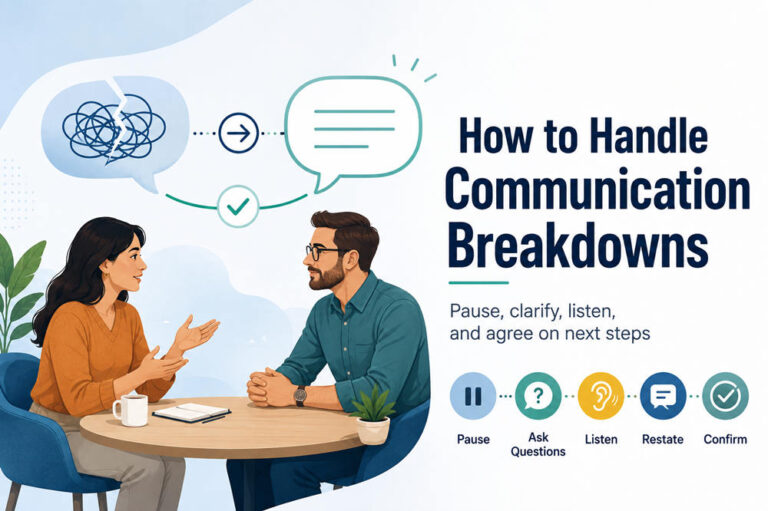
It is sometimes better to pause the discussion and return to it later.
You could say:
“I want to talk about this, but I need a few minutes to calm down first.”
Interrupting or Preparing a Response Too Early
When you focus on what you plan to say next, you may miss important parts of the other person’s message.
Allowing someone to finish does not mean you agree with them. It simply helps you understand their position before responding.
Choosing the Wrong Communication Method
A complicated or emotional discussion may be difficult to manage through text messages. Without vocal tone or facial expressions, both people may misread the conversation.
A phone call, video call, or private face-to-face discussion may be more appropriate.
Cultural Differences
Communication habits vary between cultures, families, and social groups. Directness, eye contact, personal space, silence, and emotional expression may carry different meanings.
Avoid assuming that your communication style is the only correct one. Pay attention to the individual and ask respectful questions when something is unclear.
How to Improve Your Interpersonal Communication Skills
You can improve your communication by becoming more intentional about how you speak, listen, and respond.
Listen to Understand
Give the other person your attention. Put away unnecessary distractions and avoid interrupting.
Before offering your opinion, confirm that you understood the main point.
Try saying:
“What I am hearing is that you need more time and clearer instructions. Is that correct?”
Ask Useful Questions
Questions help you replace guesses with information.
Open-ended questions encourage fuller answers:
- “What part of the project is causing difficulty?”
- “How did that situation affect you?”
- “What would make this easier?”
- “What outcome are you hoping for?”
Avoid asking questions that are really hidden accusations, such as, “Why are you always so careless?”
Be Direct and Respectful
Direct communication does not have to be rude. You can clearly express what you need while respecting the other person.
Instead of saying:
“You never help around here.”
Try:
“I need help cleaning the kitchen after dinner. Can you handle the dishes tonight?”
The second version explains the problem and makes a clear request.
Use “I” Statements During Conflict
“I” statements focus on your experience rather than assigning a negative label to the other person.
For example:
“I felt left out when the decision was made without me.”
This is usually easier to discuss than:
“You do not care what I think.”
An “I” statement should still be specific. It should explain what happened, how it affected you, and what you would like to change.
Match the Method to the Message
Use short messages for simple information, such as confirming an appointment. Choose a richer communication method for emotional, sensitive, or complicated subjects.
Do not use a group chat to criticize one person. Do not send an unclear text when a five-minute conversation could solve the issue.
Pay Attention to Your Delivery
Notice your volume, facial expression, posture, and tone. Even helpful words can sound hostile when they are delivered aggressively.
If the other person becomes confused or defensive, pause and consider whether your delivery affected the message.
Give Specific Feedback
Effective feedback identifies what happened and what should happen next.
Instead of:
“You need to communicate better.”
Say:
“Please let me know by noon when a deadline may be missed so we have time to adjust the schedule.”
The second statement gives the person a clear action.
Know When to Pause
Not every disagreement needs to be solved immediately. A short pause can help both people organize their thoughts and return with a calmer approach.
However, taking a break should not become permanent avoidance. Agree on a time to continue the conversation.
Interpersonal Communication in the Workplace
Workplace communication skills affect productivity, teamwork, leadership, and customer relationships.
You use interpersonal skills when you:
- Explain a task
- Ask for assistance
- Participate in meetings
- Give or receive feedback
- Speak with customers
- Handle disagreements
- Train a new employee
- Discuss performance
- Negotiate responsibilities
Remote and hybrid work require extra clarity because coworkers cannot always see what others are doing. Written updates, clear deadlines, and regular check-ins can prevent people from working with incomplete information.
Good workplace communication does not mean holding more meetings or sending more messages. It means giving the right information to the right people at the right time.
Interpersonal Communication vs. Intrapersonal Communication
Interpersonal communication takes place between people. Intrapersonal communication happens within your own mind.
Examples of intrapersonal communication include:
- Thinking through a decision
- Reflecting on your emotions
- Rehearsing a conversation
- Questioning your assumptions
- Encouraging yourself before a challenge
Your internal thoughts influence how you communicate with others. If you assume a person dislikes you, you may interpret their words more negatively than intended.
Becoming aware of your thoughts can help you respond to what was actually said instead of reacting only to your assumptions.
Interpersonal Communication vs. Mass Communication
Interpersonal communication usually involves direct interaction between a small number of people. Participants can respond to each other and adjust the conversation as it develops.
Mass communication sends a message to a large audience through television, newspapers, radio, websites, podcasts, or social media.
A private phone call is interpersonal communication. A television news broadcast is mass communication. A public social media post may be mass communication, while a private conversation in the comments or direct messages becomes interpersonal.
Final Thoughts
Interpersonal communication shapes how you build relationships, complete work, resolve disagreements, and express your needs. It includes speaking clearly, listening carefully, noticing nonverbal signals, and choosing the right way to deliver a message.
You will not handle every conversation perfectly. What matters is being willing to clarify misunderstandings, listen to feedback, and communicate with greater care.