Material and Nonmaterial Culture Explained With Clear Differences and Examples From Everyday Life
Every culture has things you can touch and things you cannot. Buildings, clothing, phones, artwork, and tools are physical parts of culture. Beliefs, values, customs, language, and social rules exist through shared understanding rather than as physical objects.
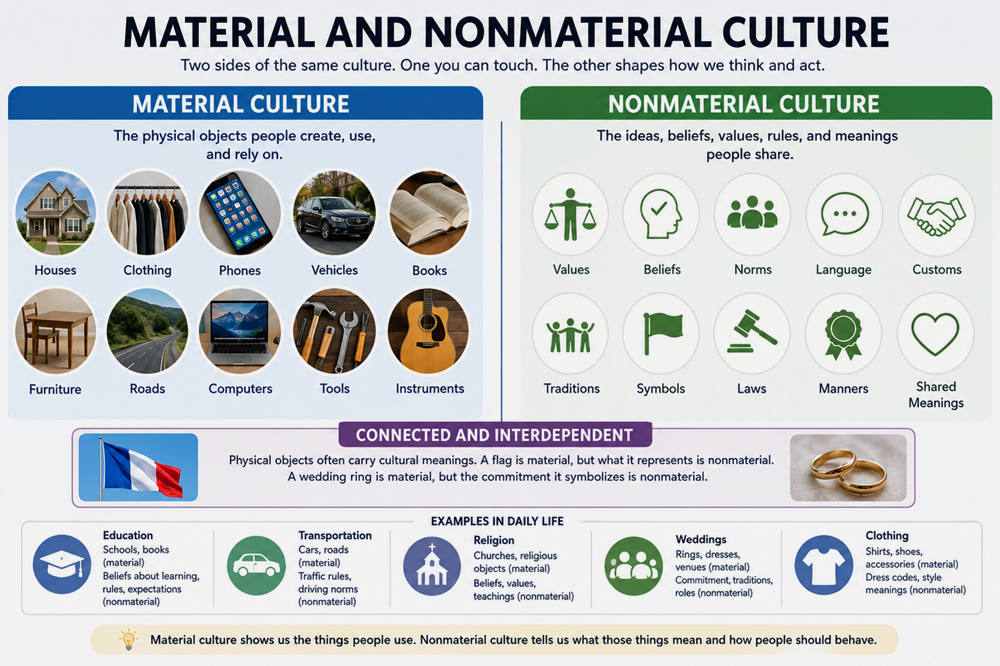
This is the basic difference between the two: material culture and nonmaterial culture represent two connected sides of culture. Material culture includes tangible objects created or used by a society, while nonmaterial culture includes the ideas, beliefs, values, norms, and meanings people share.
What Is Material Culture?
Material culture refers to the physical objects connected to a society or group. If you can see, touch, build, wear, carry, or use something, it may be part of material culture.
Examples include:
- Houses and other buildings
- Clothing and jewelry
- Cars, buses, and bicycles
- Smartphones and computers
- Furniture
- Books
- Artwork
- Tools and machinery
- Roads and bridges
- Musical instruments
- Religious objects
These objects can reveal a lot about how people live.
For example, smartphones show how important digital communication has become in many societies. Public transportation systems can reflect how cities are organized, while clothing can tell you something about climate, technology, fashion, social roles, or tradition.
Material culture is not limited to expensive or historically important objects. An ordinary coffee mug, backpack, kitchen appliance, or pair of shoes can be part of it.
What Is Nonmaterial Culture?
Nonmaterial culture covers the ideas and shared understandings that influence how people behave. You cannot physically hold a custom or belief, but it can still have a powerful effect on everyday life.
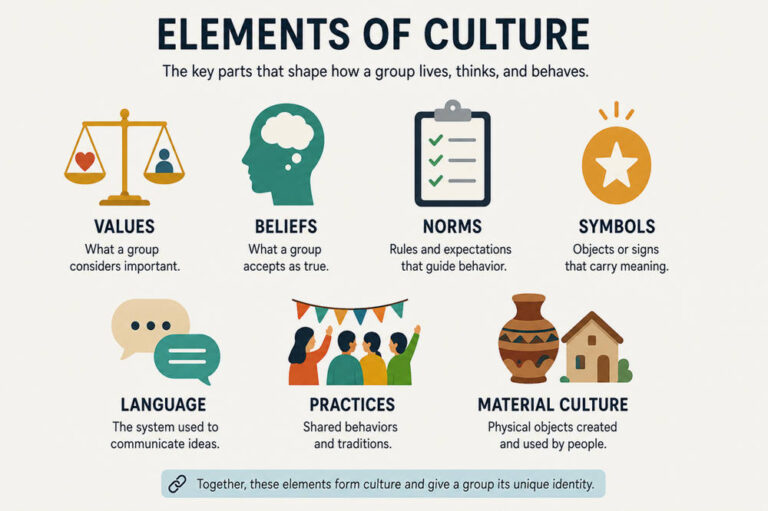
Major parts of nonmaterial culture include:
- Values: Ideas about what is important, good, or desirable
- Beliefs: Ideas people accept as true
- Norms: Expectations about acceptable behavior
- Language: A shared system of communication
- Customs: Common ways of behaving in particular situations
- Traditions: Practices passed from one generation to another
- Symbols: Things that carry shared cultural meanings
Values, beliefs, symbols, and language are important elements of nonmaterial culture.
Imagine waiting in line at a store. The people and the checkout counter are physical, but the expectation that you should wait your turn is not. It is a social norm that people learn and generally follow.
The same applies to manners. Saying “thank you,” respecting personal space, or behaving quietly in certain places can reflect cultural expectations even though the expectations themselves are not objects.
Differences Between Material and Nonmaterial Culture
The easiest way to tell them apart is to determine whether you are dealing with a physical object or the belief, rule, value, or meaning connected to it.
| Feature | Material Culture | Nonmaterial Culture |
|---|---|---|
| Nature | Tangible | Intangible |
| Can you physically touch it? | Yes | No |
| Includes | Objects and artifacts | Beliefs, values, norms, language, customs |
| Examples | Clothing, phones, cars, buildings | Manners, traditions, beliefs, social rules |
| Seen through | Physical things people create and use | Ideas and expectations that influence behavior |
The distinction does not mean the two exist separately. Material and nonmaterial aspects of culture are closely connected, and material objects often gain importance because people attach cultural meanings to them.
Examples of Material and Nonmaterial Culture
A few paired examples make the difference especially clear.
Clothing
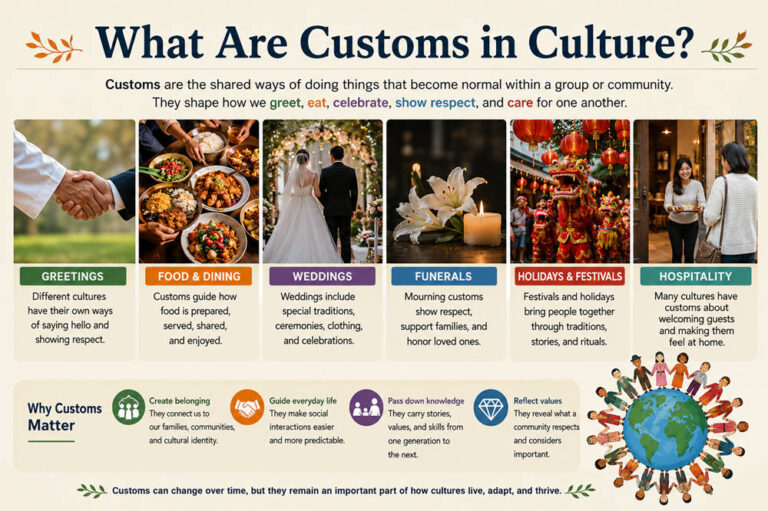
A wedding dress, school uniform, business suit, or pair of jeans is material culture because it is a physical object.
Ideas about when that clothing should be worn are nonmaterial culture.
For example, a society may have expectations about what is suitable for a wedding, funeral, workplace, religious service, or formal event. The clothes are material; the rules and meanings surrounding them are nonmaterial.
Education
School buildings, desks, books, computers, and whiteboards belong to material culture.
Beliefs about the importance of education, classroom expectations, teaching practices, and rules about student behavior are nonmaterial culture.
A desk can be touched. The expectation that students should raise their hands before speaking cannot.
Transportation
Cars, buses, trains, roads, traffic lights, and bicycles are material culture.
Traffic rules and shared expectations about how drivers and passengers should behave are nonmaterial culture.
Consider a traffic light. The light itself is a physical object. The shared understanding that red means stop and green means go depends on learned cultural meaning.
Religion
Places of worship, ceremonial clothing, books, artwork, and religious objects are examples of material culture.
Religious beliefs, moral teachings, traditions, and values are nonmaterial culture.
A physical object may therefore be important not simply because of what it is made from, but because of what people believe it represents.
Weddings
Wedding rings, dresses, decorations, invitations, and venues are material culture.
Beliefs about marriage, commitment, family relationships, and wedding traditions belong to nonmaterial culture.
A wedding ring illustrates the distinction particularly well. The physical ring is material culture; the meaning of commitment attached to it is nonmaterial culture.
How Material and Nonmaterial Culture Work Together
You rarely encounter material culture without some kind of nonmaterial meaning surrounding it.
Take a national flag. The fabric is a physical object, making it part of material culture. The identity, history, values, or emotions people associate with that flag belong to nonmaterial culture.
A smartphone offers another example. The device is material culture, but social expectations about when it is acceptable to use one are nonmaterial.
The same pattern appears almost everywhere:
- A school building is material; beliefs about education are nonmaterial.
- A gift is material; the custom of giving gifts on certain occasions is nonmaterial.
- A uniform is material; the authority or role it represents is nonmaterial.
- A religious object is material; the spiritual meaning associated with it is nonmaterial.
Physical objects can function as symbols and communicate nonmaterial cultural meanings that go beyond the objects themselves.
That is why it is more accurate to separate the object from its meaning rather than saying that an object itself simply becomes nonmaterial.
Why Is Language Nonmaterial Culture?
Language can seem like a confusing example because you can hear speech and see written words. However, language is considered part of nonmaterial culture because the language itself is a shared system of symbols and meanings.
A printed dictionary is a physical book, so the book is material culture.
The language recorded inside it—the meanings of words, grammar, and shared rules people use to communicate—is nonmaterial culture.
The same distinction applies to a road sign. The metal sign is material. Your ability to understand what its words or symbols mean depends on nonmaterial culture.
Why the Difference Matters
The distinction between material and nonmaterial culture helps explain why studying physical objects alone does not give you a complete understanding of a society.
Imagine finding an unfamiliar ceremonial object without knowing anything about the people who used it. You could describe its size, material, shape, and decoration, but those physical details would not necessarily tell you what the object meant.
To understand it fully, you would also need to know the beliefs, traditions, values, or customs surrounding it.
The same is true in everyday life. Two groups can use similar physical objects while attaching very different meanings to them. Clothing that is considered casual in one setting may be viewed as formal or inappropriate somewhere else. A gesture that appears friendly in one culture can carry a different meaning in another.
Material culture shows you many of the things people use and create. Nonmaterial culture helps explain what those things mean and how people are expected to behave around them.
Material vs. Nonmaterial Culture in Simple Terms
The difference can be remembered with one simple question:
Are you looking at the physical thing, or at the idea and meaning behind it?
Material culture is physical. It includes objects such as clothing, buildings, vehicles, phones, tools, and artwork.
Nonmaterial culture is intangible. It includes beliefs, values, language, customs, traditions, norms, and shared meanings.
A wedding ring is material culture; the commitment it symbolizes is nonmaterial culture. A stop sign is material culture; the rule telling drivers to stop is nonmaterial culture.
Both are parts of the same cultural system. One shapes the physical world people live in, while the other helps determine what that world means and how people behave within it.