In Relation to Leading a Culture of Integrity, Supervisors Are Responsible for What?
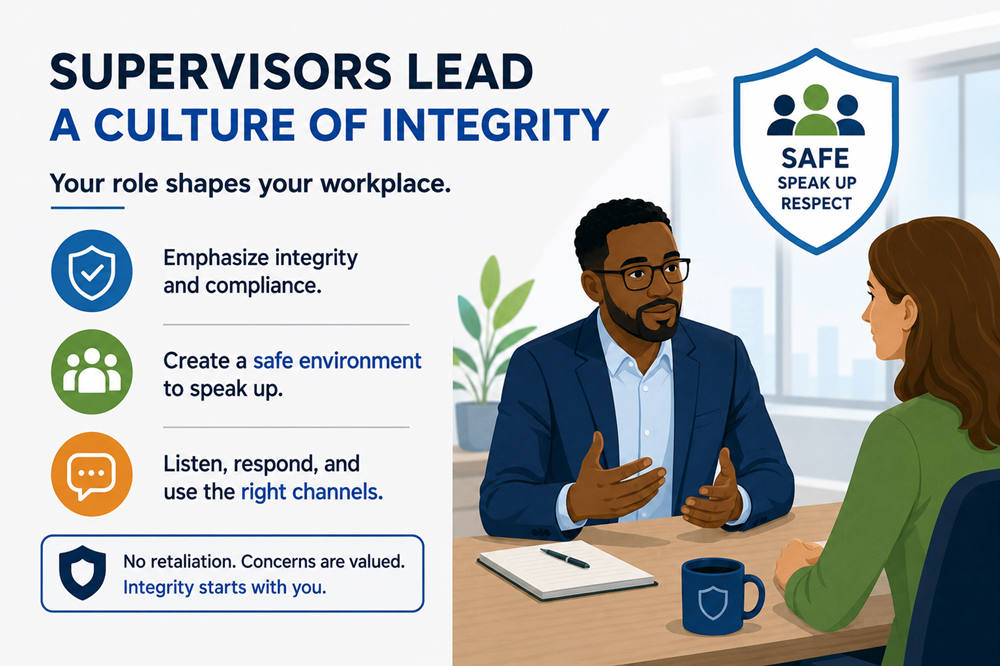
In relation to leading a culture of integrity, supervisors are responsible for emphasizing integrity and compliance, setting the ethical tone, and creating a safe environment where employees can raise concerns without fear of retaliation. The VA’s Office of Integrity and Compliance describes a culture of integrity as one where employees follow applicable laws, policies, and regulations while being encouraged to speak up about concerns.
A supervisor’s role is not simply to enforce rules. How supervisors behave, respond to concerns, and treat employees helps determine whether integrity is actually practiced in the workplace.
What Is the Correct Answer?
The correct answer is that supervisors should emphasize the importance of integrity and compliance and foster a safe environment where employees can speak up without fear of retaliation.
In practical terms, employees should feel comfortable asking questions or reporting something that seems wrong. A supervisor should listen, take the concern seriously, and make sure it reaches the proper channel when further action is needed.
Employees do not have to prove that misconduct occurred before raising a concern. Sometimes they simply notice an action or practice that appears inconsistent with laws, policies, regulations, or organizational values.
Why Supervisors Have an Important Role in a Culture of Integrity
Policies establish expectations, but supervisors help determine how those expectations are followed day to day.
Employees watch how supervisors handle mistakes, difficult decisions, conflicts, workplace concerns, and possible violations. A supervisor who follows the rules consistently sends a much stronger message than one who talks about integrity but ignores questionable behavior.
The U.S. Office of Government Ethics emphasizes the importance of ethical leadership and encourages leaders to model ethical conduct, inform employees about proper reporting channels, and promote awareness of protections for those who report misconduct.
This makes supervisors an important link between written standards and everyday behavior.
A culture of integrity becomes stronger when employees see that:
- Rules apply consistently.
- Concerns are taken seriously.
- Ethical behavior is expected from supervisors as well as staff.
- Employees can ask questions when they are uncertain.
- Speaking up about legitimate concerns is supported rather than punished.
Integrity has to be demonstrated, not simply discussed.
What Creating a Safe Environment for Employees Means
A safe environment does not mean every allegation is automatically assumed to be true. It means employees can raise good-faith concerns without being intimidated or punished simply for speaking up.
VHA describes its culture of integrity as an environment that encourages employees to speak up and report concerns without fear of retaliation.
Encourage Employees to Speak Up
Employees are often the first people to notice that something may be wrong.
They might see questionable conduct, misuse of resources, possible fraud, conflicts of interest, unsafe practices, or actions that do not appear to follow policy.
A supervisor should make it clear that employees are allowed to ask questions and raise concerns.
The supervisor does not need to know the answer immediately. Listening and directing the concern to the appropriate person may be the right response.
Protect Employees From Retaliation
Employees may hesitate to report problems when they believe speaking up could lead to punishment or unfair treatment.
That fear can allow problems to continue.
The VHA’s Code of Integrity addresses non-retaliation and explains employees’ responsibilities and options for raising concerns and reporting violations. Federal employees also have protections against certain forms of whistleblower retaliation through the U.S. Office of Special Counsel.
Supervisors therefore need to avoid discouraging legitimate reporting or treating an employee negatively simply because that employee raised a concern.
An employee should be able to make a good-faith report even if a later review finds that no violation occurred.
Provide Clear Reporting Options
Employees should also understand that their immediate supervisor is not necessarily their only reporting option.
VHA’s guidance on raising concerns and reporting violations explains that employees may report certain concerns to supervisors, management officials, or appropriate oversight channels.
This is particularly important when the concern involves the employee’s supervisor.
A supervisor who supports a culture of integrity should not try to prevent employees from using authorized reporting channels.
Respond Appropriately to Concerns
When a concern is raised, supervisors should listen carefully and follow the appropriate process.
Some issues may be handled at the supervisory level. Others may need to be referred to compliance personnel, management, ethics officials, human resources, or another appropriate office.
The supervisor’s job is not always to personally investigate the issue. The important part is making sure a legitimate concern is not ignored.
How Supervisors Can Lead With Integrity Every Day
Leading a culture of integrity usually comes down to ordinary decisions made consistently.
Model Ethical Behavior
Supervisors should follow the same standards they expect employees to follow.
That means being honest, following applicable rules, using organizational resources properly, handling conflicts responsibly, and admitting mistakes when they occur.
Employees are less likely to respect ethical standards when supervisors appear to exempt themselves from those standards.
Apply Rules Consistently
Similar situations should be handled in similar ways.
Favoritism and selective enforcement can quickly damage trust. Employees may begin to believe that policies depend on someone’s position, relationship with management, or popularity.
Consistent treatment makes expectations clearer.
Listen Before Reacting
Employees should not be treated as troublemakers simply because they bring up an uncomfortable issue.
A supervisor can listen, ask reasonable questions, and determine where the concern should go next.
Sometimes the most responsible response is simply, “I don’t know yet, but I’ll make sure this reaches the right person.”
Know When to Seek Guidance
Supervisors do not need to be experts on every ethics or compliance issue.
When a situation involves complicated policies or regulations, asking the appropriate office for guidance is usually better than guessing. The Office of Government Ethics provides resources on ethical leadership and building an ethical culture, including the role leaders play in reinforcing ethical behavior.
Hold Yourself Accountable
Integrity also means accepting responsibility when something goes wrong.
Supervisors who admit mistakes and correct them show employees that accountability applies to everyone.
Trying to hide mistakes or shift blame sends the opposite message.
Why the Other Possible Answers Are Incorrect
Some versions of this integrity-training question may include answers that sound believable but do not correctly describe the supervisor’s role.
“Supervisors Define Integrity and Compliance Standards in Their Own Department”
This is incorrect.
Supervisors reinforce established standards rather than making up their own rules. The VHA Code of Integrity brings together applicable policies, laws, regulations, and principles that employees are expected to follow.
Supervisors help employees understand and apply those requirements.
“Supervisors Follow the Tone Set by Their Employees”
This reverses the leadership relationship.
Employees certainly contribute to workplace culture, but supervisors have a specific responsibility to help establish and reinforce ethical expectations.
Their own behavior should demonstrate the standards expected from employees.
“Supervisors Are the Only Individuals Who Can Report a Violation”
This is also incorrect.
VHA provides several ways to report concerns. Depending on the issue, an employee may speak with a supervisor, another management official, an integrity and compliance contact, or an appropriate oversight office.
Federal employees may also have access to independent channels such as the U.S. Office of Special Counsel’s disclosure process for qualifying disclosures of government wrongdoing.
Having more than one reporting option is important because an employee may sometimes feel uncomfortable discussing a concern with an immediate supervisor.
Key Takeaway
In relation to leading a culture of integrity, supervisors are responsible for emphasizing integrity and compliance, setting an ethical example, and creating an environment where employees can raise concerns without fear of retaliation.
The most effective supervisors do this through everyday behavior: they follow established standards, listen when employees speak up, apply rules fairly, use the correct reporting channels, and hold themselves accountable.
That is what turns integrity from a written policy into part of the workplace culture.