How to Teach Kids Teamwork: 10 Practical Ways to Build Cooperation
Children do not automatically learn teamwork when they are placed in a group. They may compete for control, work separately, wait for someone else to take charge, or become frustrated when their ideas are not chosen.
Teamwork develops through practice. Children need to learn how to listen, explain ideas, share responsibility, adjust a plan, and work through disagreements. Parents, teachers, caregivers, and coaches can teach these abilities through everyday tasks, play, classroom projects, and team activities.
What Teamwork Means for Children
Teamwork means coordinating with other people to reach a shared goal. Children might build one structure, prepare a meal, solve a problem, clean a shared space, create a performance, or play a team sport.
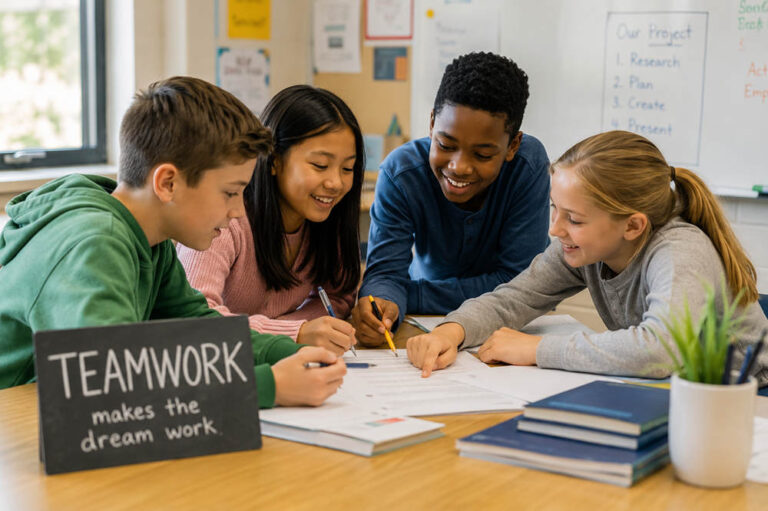
Working near other children is not always teamwork. Genuine cooperation requires children’s actions to connect. They may divide responsibilities, exchange information, make decisions together, or change what they are doing in response to a teammate.
The abilities behind teamwork include communication, self-control, empathy, flexibility, planning, and responsible decision-making. The CASEL framework for social and emotional learning includes cooperation, relationship skills, collective goals, and constructive problem-solving among the abilities children can develop and practice.
1. Teach One Teamwork Skill at a Time
“Work together” is too broad to tell a child what to do. Break teamwork into small, observable behaviors that can be explained and practiced separately.
Start with skills such as:
- Listening while another person speaks
- Taking turns with materials or decisions
- Asking another child for their opinion
- Explaining an idea clearly
- Offering help without taking over
- Completing an agreed responsibility
Give children simple language they can use during an activity:
- “What do you think?”
- “Can you show me your idea?”
- “Would you like some help?”
- “Could we try both ways?”
Short practice is often more effective than a long explanation. Two children can take turns adding pieces to a drawing, building a tower, or telling parts of a story before they attempt a more complicated group project.
2. Model the Behavior You Want to See
Children watch how adults communicate, divide work, respond to mistakes, and handle different opinions. Those examples can be more influential than instructions about being cooperative.
Let children see adults asking for help, listening without interrupting, sharing credit, and changing a plan when someone offers a better idea. Describe the cooperation when doing so feels natural:
“I was going to organize the supplies one way, but your teacher suggested another idea. We combined the two plans, and now everything is easier to find.”
Model respectful disagreement as well. Teamwork does not require people to hide different opinions. Children can learn that it is possible to question an idea, explain a concern, and reach a decision without insulting anyone.
Adult behavior matters most when something goes wrong. A calm response to frustration gives children a useful example of how to recover when their own team encounters a problem.
3. Create a Real Shared Goal
A strong teamwork activity gives children a reason to depend on one another. If every participant can complete the task separately, there may be little need to communicate or coordinate.
Choose a goal that is clear, manageable, and easier to achieve through combined effort. Examples include:
- Building one bridge from limited materials
- Preparing different parts of a family meal
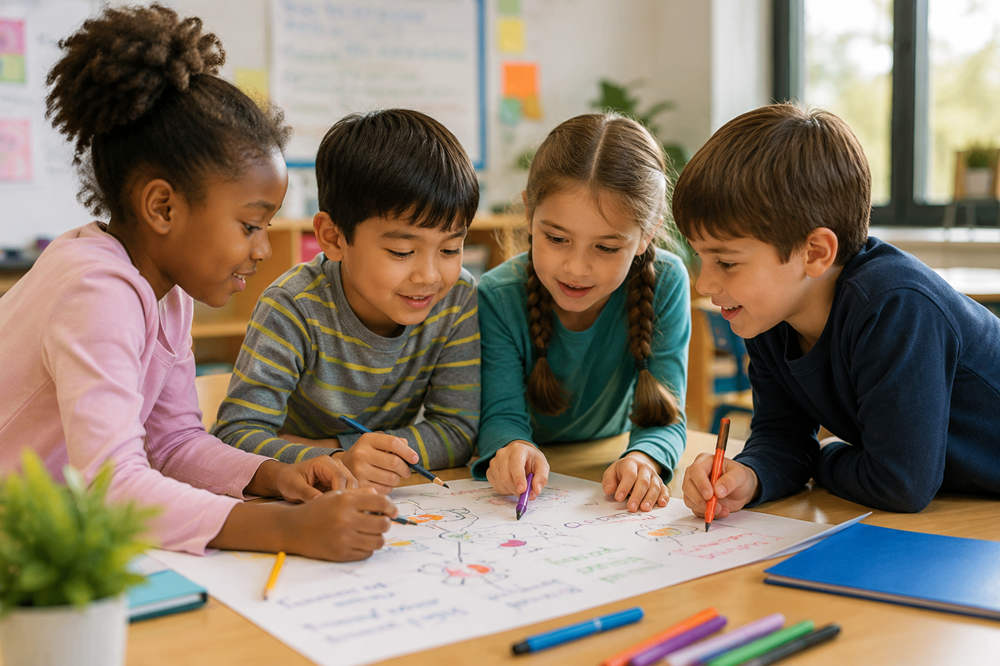
- Creating a shared poster or story
- Following clues in a scavenger hunt
- Planning a small performance
- Organizing supplies for a classroom or club
Make sure children understand the goal before they begin. A confusing task can create unnecessary conflict because participants may be working toward different outcomes.
The Education Endowment Foundation’s review of collaborative learning distinguishes carefully structured cooperation from simply seating pupils together. It notes that children need practice and that activities should make participation possible for everyone.
In classroom research reviewed by the foundation, many promising approaches use groups of three to five pupils and a shared outcome. That is not a universal rule, but it can be a useful starting point for school projects. The best group size still depends on the children, setting, and task.
4. Give Every Child a Meaningful Role
Roles can prevent one child from taking over while everyone else watches. They also show children what contributing to the team looks like.
Possible roles include:
- Planner
- Builder
- Materials manager
- Recorder
- Timekeeper
- Checker
- Presenter
Each role should affect the outcome. Children usually recognize when a responsibility has been invented only to keep someone occupied.
Explain how the roles connect. A materials manager may need to listen to the builders, while a recorder must collect ideas from the entire group. This helps children understand that a team is more than several people completing unrelated assignments.
Rotate roles over time so children practice different kinds of contribution. Avoid permanently identifying one child as the leader, another as the creative one, and another as the helper. Listening, planning, speaking, and supporting are abilities everyone can develop.
5. Let Children Make Team Decisions
Children have little opportunity to practice cooperation if an adult makes every important choice. Give the group some control over how it will reach the goal.
Depending on their ages, children might decide:
- How to divide the work
- Which materials to use
- What idea to test first
- How to present the result
- What to change when a plan fails
Younger children may need two or three clear choices. Older children can create a plan with less adult direction.
When children prefer different ideas, resist deciding immediately. Ask what each option could accomplish, whether the ideas can be combined, or whether the team can test both.
Children also need experience with decisions that do not favor them. Flexibility means accepting a fair group decision while continuing to contribute. It does not mean allowing the loudest child to control the activity.
6. Coach the Group, Then Step Back
Adults need to find a balance between taking over and leaving children without enough support. Too much direction prevents them from learning how to coordinate. Too little can allow exclusion or confusion to continue.
At the beginning, clarify the goal and teach any unfamiliar skills. Once the activity starts, observe before intervening.
When the group becomes stuck, ask questions instead of immediately supplying an answer:
- “What is stopping the team from moving forward?”
- “Has everyone had a chance to explain?”
- “Which part of the plan needs to change?”
- “What could the group try next?”
More direct intervention is appropriate when someone is being excluded, the activity becomes unsafe, emotions prevent productive discussion, or one child controls every decision.
Gradually reduce support as children become more capable. The Center on the Developing Child at Harvard University explains that planning, self-control, attention, and mental flexibility are abilities that develop over time. Adults can support that growth without expecting children to manage every complex group situation independently.
7. Teach Children to Handle Conflict
Conflict is not evidence that a teamwork activity has failed. It is one of the situations in which children practice teamwork most directly.
Pause When Emotions Are High
Children cannot solve a group problem effectively when they are overwhelmed. Give them time to breathe, move away briefly, or describe what they are feeling before discussing what happened.
Hear Each Person’s View
Let every child explain what happened, what they were trying to do, and what they needed from the group. Ask the others to listen before responding.
This can reveal a difference between intention and effect. A child may not have intended to exclude someone, but the group still needs to address the exclusion.
Define the Shared Problem
Move the discussion away from deciding who is bad or wrong. Instead, identify what is preventing the team from continuing.
The problem may be that two children want the same role, no one understands the plan, or one participant feels that their ideas are repeatedly ignored.
Choose Something to Try
Ask the children to suggest possible solutions. They might rotate a role, combine ideas, establish a turn-taking system, or restart one part of the task.
A solution does not have to be perfect. The group can test it and make another adjustment if necessary.
8. Praise Cooperation, Not Only Success
If adults focus only on winning or the finished product, children may decide that results matter more than how teammates treat one another.
Notice specific actions that helped the group:
- “You asked everyone before changing the plan.”
- “You offered help instead of doing the task for your teammate.”
- “The first idea failed, but the group adjusted.”
- “You disagreed and still found a way forward.”
Recognize less visible contributions. A child who organizes materials, notices an error, or encourages a nervous teammate may be just as important as the person who presents the final result.
It is also worth praising recovery. A team may become disorganized or argue before finding a better approach. Learning to recover is an important part of cooperation.
9. Reflect After the Activity
A brief discussion helps children recognize what made the team effective. Otherwise, they may remember only whether the activity was fun or whether they won.
Ask a few focused questions:
- What helped the team make progress?
- When did the task become difficult?
- How did the group make decisions?
- Did everyone have a useful way to contribute?
- What would you do differently next time?
Encourage each child to identify one contribution of their own and one useful action from a teammate. This builds personal responsibility while keeping the discussion focused on the group.
Reflection should not become a public search for someone to blame. Its purpose is to help children notice patterns and approach the next activity more thoughtfully.
10. Match Teamwork Activities to the Children
Children need different levels of structure depending on their ages, experience, personalities, and communication needs. The task should stretch their abilities without demanding skills they have not yet developed.
Preschool Children
Keep activities brief, concrete, and playful. Children might build something together, create a shared picture, carry an object with a partner, act out a pretend shop, or complete a simple cleanup.
Shared play is particularly useful at this age. The American Academy of Pediatrics notes that back-and-forth play can support communication, perspective-taking, emotional awareness, and problem-solving. Adults may still need to provide words for taking turns and resolving small disputes.
Elementary-Age Children
Children in elementary school can begin planning, rotating roles, and reviewing how the team worked. Useful activities include construction challenges, cooking, gardening, cooperative games, group storytelling, and small service projects.
Begin with clear expectations, then gradually allow the children to organize more of the work themselves.
Older Children and Preteens
Older children can manage projects involving longer planning and more complex decisions. They might produce a presentation, organize an event, complete an engineering challenge, create a video, or design a community project.
Give them genuine responsibility, but continue watching how influence and participation are distributed within the group.
Make Participation Flexible
Not every child contributes in the same way. Some think aloud, while others need time to process an idea. Children may contribute through speaking, writing, planning, drawing, building, observing, checking, or organizing.
A child who finds groups overwhelming may benefit from a familiar partner, a smaller team, visual instructions, predictable roles, or time to prepare. The goal is meaningful participation rather than making every child collaborate in exactly the same way.
Final Takeaway
Teamwork develops through repeated, supported experience. Children need adults to model cooperation, teach specific communication skills, create meaningful shared goals, and coach them through disagreements without solving every problem for them.
Successful teamwork does not mean constant agreement or flawless behavior. It means learning to listen, contribute, adapt, and continue working with others when the first plan does not succeed.