
Cognitive Communication Deficit ICD 10 Code R41.841 Meaning Symptoms Diagnosis and Treatment
A cognitive communication deficit affects how you use thinking skills to communicate clearly. You may have trouble remembering information, following conversations, organizing your thoughts, staying focused, or responding appropriately even when you can physically speak without difficulty.
The ICD-10-CM code for cognitive communication deficit is R41.841. CMS lists R41.841 as “Cognitive communication deficit” in its speech-language pathology coding information. This code may be used when cognitive problems interfere with communication, although the underlying medical or neurological condition may also need to be documented.
Cognitive Communication Deficit ICD-10 Code R41.841
The ICD-10-CM code associated with cognitive communication deficit is R41.841. ICD-10-CM is the standardized U.S. system used to classify diagnoses and medical conditions.
| Detail | Information |
|---|---|
| ICD-10-CM code | R41.841 |
| Description | Cognitive communication deficit |
| Category | R41.84 — Other specified cognitive deficit |
| Main area affected | Communication affected by cognitive difficulties |
The code describes communication problems related to cognitive abilities rather than a problem with speech production alone.
Cognitive communication difficulties can involve memory, attention, organization, reasoning, information processing, problem-solving, and executive function.
When another medical condition is responsible for the deficit, that condition may also need to be coded. For example, coding can be different when cognitive problems result from a stroke, traumatic brain injury, or another neurological condition. ASHA provides more detailed guidance on coding cognitive evaluation and treatment services, including how the underlying diagnosis can affect code selection.
What Is a Cognitive Communication Deficit?
A cognitive communication deficit occurs when changes in thinking abilities interfere with communication.
Having a conversation requires several mental skills working together. You need to pay attention to what another person says, remember important details, understand their meaning, organize your response, and decide what information is relevant.
When one or more of these abilities are affected, communication can become difficult.
For example, someone might speak clearly but repeatedly lose track of a conversation. Another person may understand a question but struggle to organize an answer. Someone else might forget instructions shortly after hearing them.
The problem often involves the thinking skills needed to understand, organize, remember, and respond to information.
Common Symptoms of Cognitive Communication Deficit
Symptoms can vary considerably depending on which cognitive abilities are affected and what caused the condition.
Difficulty Maintaining Attention
A person may have trouble concentrating during conversations, especially when there is background noise or several people are talking.
They might lose track of the topic, miss important details, or need information repeated.
Long conversations and complicated instructions may become particularly tiring.
Memory Problems
Memory difficulties can make everyday communication frustrating.
A person may forget conversations, repeat questions, lose track of instructions, or have trouble remembering names and recent information.
Working memory may also be affected. This is the ability to temporarily hold information in your mind while using it. Problems with working memory can make multi-step instructions or detailed conversations difficult to follow.
Trouble Organizing Thoughts
Someone may know what they want to say but have difficulty putting their ideas into a logical order.
Stories may jump from one point to another, important details may be left out, or unnecessary information may be included.
This can make it harder to explain a problem, participate in a meeting, tell a story, or complete work-related conversations.
Slower Information Processing
Some people need more time to understand information and prepare a response.
Fast-moving conversations can become overwhelming. The person may understand what was said but need a few extra moments before answering.
This may be especially noticeable when instructions are complicated or unfamiliar information is being discussed.
Executive Function Problems
Executive functions help you plan, organize, solve problems, make decisions, and monitor your own behavior.
When these skills are affected, a person may have difficulty staying on topic, choosing relevant information, planning what to say, or noticing when another person has misunderstood them.
Social Communication Difficulties
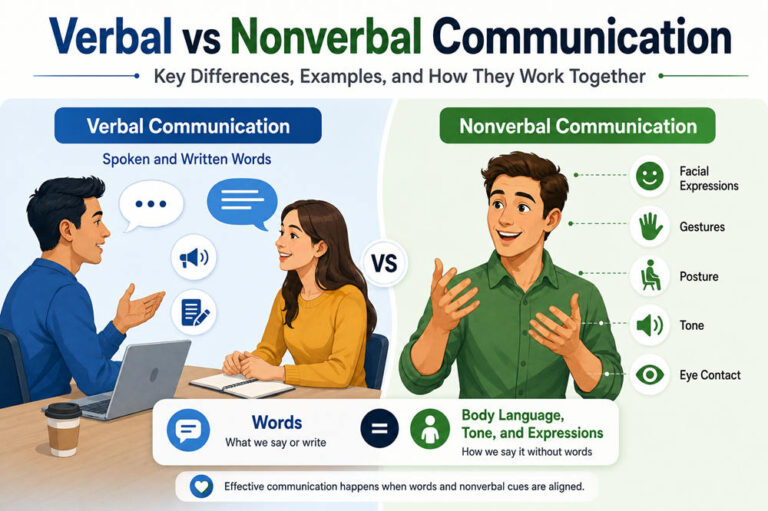
Cognitive changes can also affect the social side of communication.
Someone may struggle with:
- Taking turns in conversation
- Recognizing social cues
- Understanding humor or implied meanings
- Changing topics appropriately
- Reading another person’s emotions
- Knowing how much information to give
- Controlling interruptions
These behaviors can sometimes be mistaken for disinterest or poor manners when cognitive difficulties are actually contributing to them.
What Causes Cognitive Communication Deficits?
Cognitive communication problems are commonly associated with conditions or injuries that affect the brain.
Traumatic Brain Injury
A traumatic brain injury can affect attention, memory, reasoning, information processing, executive function, and social behavior. ASHA describes cognitive-communication changes as one area that may require assessment and treatment following TBI.
Someone recovering from a TBI may speak clearly but still struggle with complicated conversations, remembering instructions, organizing information, or controlling impulsive responses.
The severity of these problems varies depending on the nature and extent of the injury.
Stroke
A stroke can affect several abilities involved in communication.
Some people experience language problems after a stroke, while others have difficulties with memory, attention, reasoning, or processing speed. Both types of impairment can sometimes occur together.
A person might have trouble following a group conversation, remembering information they just heard, or organizing an explanation.
Brain Tumors and Other Neurological Conditions
Brain tumors and neurological conditions can interfere with the brain systems responsible for cognition and communication.
The symptoms depend heavily on which areas and functions are affected.
A neurological condition may cause changes in concentration, problem-solving, memory, language, emotional control, or social interaction.
Dementia and Neurodegenerative Diseases
Progressive neurological conditions can gradually affect communication as cognitive abilities change.
Memory problems may make it difficult to follow or remember conversations. Later changes can affect word retrieval, reasoning, organization, understanding, and the ability to communicate independently.
The specific pattern depends on the underlying condition.
How Cognitive Communication Deficits Are Diagnosed
A cognitive communication deficit is diagnosed through clinical evaluation rather than from the ICD-10 code alone.
A speech-language pathologist (SLP) often evaluates how cognitive changes are affecting communication. Medicare guidance for speech-language pathology services specifically includes evaluation and treatment of cognitive communication impairments.
Other healthcare professionals may also be involved depending on the person’s condition.
An assessment may look at whether someone can:
- Maintain attention during a conversation
- Follow spoken instructions
- Remember recently presented information
- Organize ideas logically
- Solve everyday problems
- Understand written information
- Communicate ideas in writing
- Stay on topic
- Recognize social cues
- Plan and complete multi-step activities
Formal tests may also be used to evaluate areas such as memory, attention, reasoning, executive function, and problem-solving.
Just as important is how the person functions outside a testing room. A clinician may consider whether communication difficulties affect work, school, relationships, appointments, household responsibilities, or other everyday activities.
Cognitive Communication Deficit vs. Aphasia
Cognitive communication deficit and aphasia can both make communication difficult, but they are different disorders.
ASHA describes aphasia as an acquired neurological language disorder that can affect spoken expression, written expression, spoken language comprehension, and reading comprehension.
| Cognitive Communication Deficit | Aphasia |
|---|---|
| Often involves attention, memory, reasoning, or organization | Primarily affects language |
| May make it difficult to organize conversations | May cause difficulty finding or producing words |
| Can affect problem-solving and executive function | Can affect understanding spoken language |
| Often affects social communication | Can affect reading and writing |
| Basic language skills may remain relatively strong | Language skills themselves are impaired |
A person with aphasia may know what they want to communicate but have difficulty retrieving words, forming sentences, understanding language, reading, or writing.
A person with a cognitive communication deficit may have relatively strong basic language abilities but struggle to remember information, stay focused, organize ideas, understand context, or manage a conversation effectively.
The two conditions are not mutually exclusive. Some neurological injuries can cause both language and cognitive-communication difficulties.
Treatment for Cognitive Communication Deficits
Treatment depends on the cause of the condition, the person’s symptoms, and how those difficulties affect daily life.
Speech-language therapy may focus on strengthening affected skills while also teaching practical strategies that make communication easier.
Attention Strategies
A person may practice maintaining focus for longer periods or learning how to reduce distractions.
Helpful approaches can include completing one task at a time, moving to a quieter environment for important conversations, or breaking complicated information into smaller pieces.
Memory Strategies
External tools can reduce the amount of information someone needs to remember independently.
Helpful tools may include:
- Calendars
- Smartphone reminders
- Written instructions
- Checklists
- Notes
- Daily planners
- Visual schedules
Repetition and routines can also make important information easier to remember.
Organization and Executive Function Strategies
Therapy may teach a person to break complicated tasks into manageable steps.
They may practice planning before starting a task, organizing important information, checking completed work, solving everyday problems, and recognizing mistakes.
These strategies can be especially valuable at work, school, or home.
Communication and Social Skills Practice
Therapy can also use realistic situations.
A person might practice making a phone call, participating in a conversation, explaining a problem, following instructions, telling a story, or asking for clarification.
If social communication is affected, treatment may address conversational turn-taking, staying on topic, interpreting social cues, controlling interruptions, and recognizing when a listener needs more information.
Family members and caregivers may also learn strategies that make conversations easier.
Using R41.841 for Documentation and Billing
R41.841 identifies cognitive communication deficit, but the code needs to match the individual’s documented condition. Current CMS speech-language pathology coding materials include R41.841 among applicable diagnosis codes.
When a known neurological or medical condition caused the cognitive difficulties, additional diagnosis coding may be required. The underlying condition can affect which codes should be reported and in what order.
It is also useful to distinguish between diagnosis and treatment codes.
ICD-10-CM codes describe diagnoses and health conditions, while CPT codes describe healthcare services performed. ASHA’s overview of speech-language pathology billing codes explains the major coding systems commonly used for reimbursement.
Providers therefore need to choose codes based on the patient’s clinical record, the cause of the impairment, current coding guidance, and applicable payer requirements.
Final Takeaway
R41.841 is the ICD-10-CM code for cognitive communication deficit. The condition can affect communication by interfering with attention, memory, organization, reasoning, information processing, executive function, and social interaction.
A person may still speak clearly while struggling to follow conversations, remember information, organize thoughts, or communicate effectively in everyday situations. Evaluation by a qualified healthcare professional, often including a speech-language pathologist, can identify which cognitive and communication abilities are affected and help guide treatment.