
3 Clear Ways Perceptions Can Influence Communication in Everyday Conversations
Perception affects communication because people do not always interpret words and actions in the same way. Your experiences, expectations, and feelings can influence what you think another person means.
If you need to list 3 ways perceptions can influence communication, the clearest answers are: perception can change how you interpret a message, affect your emotional response, and create assumptions about other people.
1. Perception Changes How You Interpret Messages
The same message can mean different things to different people because everyone interprets communication through their own experiences and expectations.
Imagine your manager says:
“Can you come to my office when you have a minute?”
You might see it as a normal request to discuss work. Someone who is already worried about their performance might immediately think they are in trouble.
Nothing about the message itself has changed. The difference comes from how each person perceives it.
Past experiences can have a strong effect on these interpretations. If you have dealt with a highly critical manager before, for example, you may be more likely to hear criticism in comments that another person would consider neutral.
Context matters too. Someone saying “Nice job” with a smile probably sounds sincere. The same words paired with an eye roll may sound sarcastic.
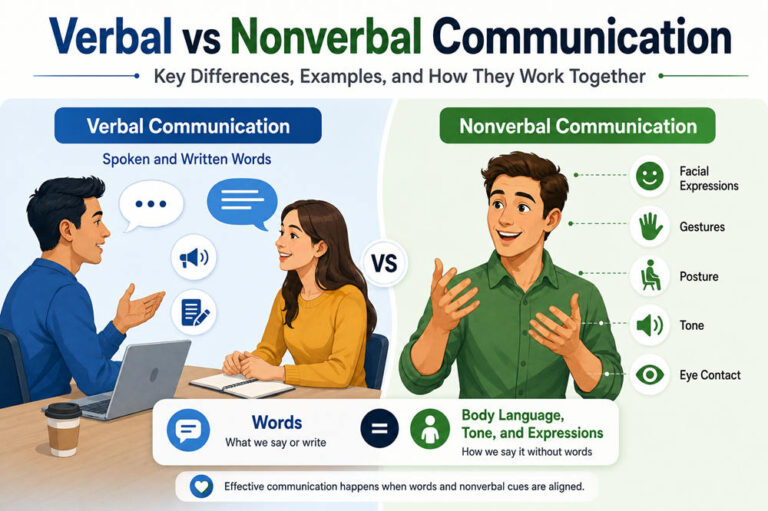
Tone of voice, facial expressions, gestures, and other forms of nonverbal communication can provide important clues about what a person is trying to communicate.
This is also one reason misunderstandings happen so easily through texts and emails. Without tone of voice, facial expressions, and body language, you have fewer clues about what the sender actually intended.
2. Perception Shapes Your Emotional Response
How you perceive a message can influence how you feel about it and, in turn, how you respond.
Consider someone saying:
“You seem quiet today.”
If you hear concern in that statement, you might simply answer, “I’m tired today.”
If you think the person is criticizing you, you may become defensive and answer, “What’s wrong with being quiet?”
The statement is identical, but your interpretation changes your emotional reaction.
This can affect the rest of the conversation. When you believe someone is annoyed, disrespectful, or critical, you may respond more sharply than you normally would. The other person may then react defensively, turning a misunderstanding into an argument.
Instead of immediately responding to what you think someone means, it often helps to check.
For example, rather than saying:
“You’re angry with me.”
You could ask:
“You seem a little quiet. Is something bothering you?”
That small change gives the other person an opportunity to explain instead of forcing the conversation to revolve around an assumption.
3. Perception Creates Assumptions About Other People
Once you form an opinion about someone, it can influence how you understand future conversations with them.
If you see someone as friendly, you may interpret a joke as playful. If you already believe that person is rude, the same joke may feel insulting.
First impressions can influence these perceptions. Tone of voice, facial expressions, body language, reputation, and previous interactions can all shape what you expect from someone.
The problem is that an impression is not always accurate.
Someone who seems unfriendly may simply be shy. Someone who gives short answers may be busy rather than annoyed. A nervous person may know much more about a subject than their behavior suggests.
Problems arise when you start treating your interpretation as a fact.
For example:
Fact: They have not replied to your message yet.
Assumption: They are deliberately ignoring you.
You know the first statement is true. You do not yet know whether the second one is true.
The same difference appears in many everyday situations. You might assume someone is angry when they are tired, uninterested when they are nervous, or rude when they simply have a more direct communication style.
Recognizing the difference between what happened and what you think it means can prevent unnecessary conflict.
How to Avoid Perception-Based Misunderstandings
You cannot avoid perception entirely, but you can become more aware of how it affects your conversations.
Ask When Something Is Unclear
Rather than guessing what another person meant, ask them. This approach is sometimes described as perception checking, where you check your interpretation instead of automatically assuming it is correct.
You can use simple questions such as:
- “What did you mean by that?”
- “Can you explain that a little more?”
- “Did you mean that as a suggestion?”
- “I may have misunderstood. Can you clarify?”
Clarifying a message is usually easier than trying to repair a disagreement caused by a wrong assumption.
Separate Facts From Assumptions
Ask yourself what you actually know.
If someone answered you with only a few words, that is something you observed. Deciding they must be angry with you is your interpretation.
That interpretation could be right, but it could also be wrong.
Listen Before Reacting
Give people time to finish explaining themselves before deciding what they mean. Practicing active listening can make it easier to focus on what someone is actually communicating rather than reacting immediately to your first interpretation.
Reacting too quickly can cause you to respond to your own interpretation rather than the message they were trying to communicate.
Be Willing to Reconsider Your First Impression
First impressions can be useful, but they are not always accurate.
As you learn more about someone or a situation, be willing to change your interpretation. A person you initially thought was unfriendly may simply communicate differently from you.
Final Takeaway
The three clearest ways perceptions can influence communication are:
- Perception changes how you interpret messages.
- Perception shapes your emotional response and behavior.
- Perception creates assumptions and expectations about other people.
Perception is a normal part of communication. Problems usually occur when you assume your interpretation is automatically correct. Listening carefully, checking unclear meanings, and separating facts from assumptions can help you understand others more accurately and communicate with less unnecessary conflict.