10 Cultural Breakfast Ideas From Around the World to Try at Home
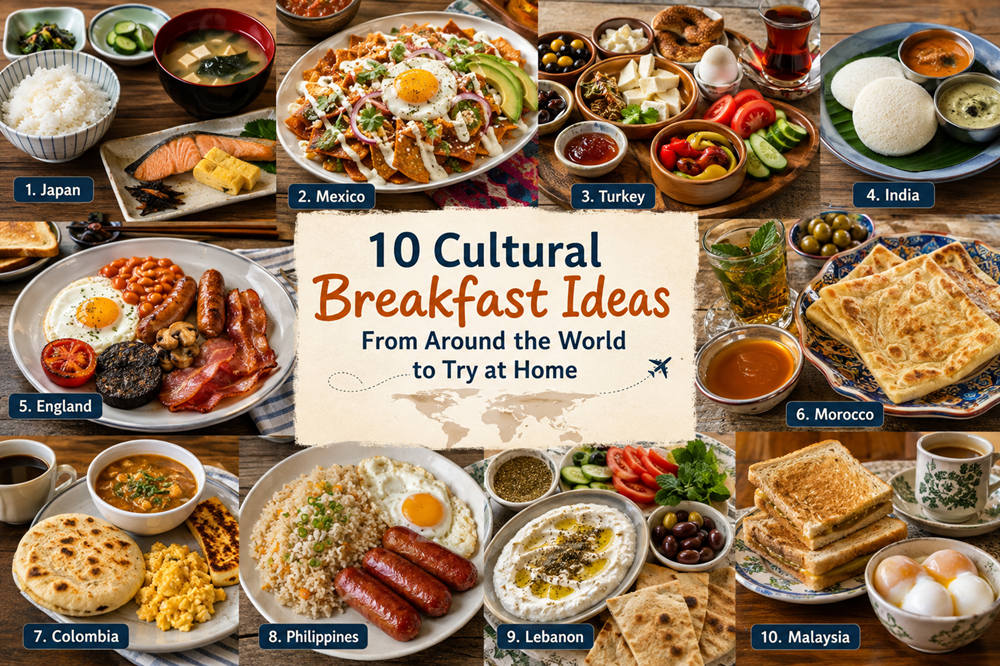
Breakfast looks very different depending on where you are in the world. One morning might begin with rice and miso soup, while another starts with spicy chilaquiles, fresh bread and olives, or coconut rice with sambal.
If your usual breakfast is getting boring, these cultural breakfast ideas give you plenty of new flavors to explore. You do not need to recreate every tradition perfectly—starting with one or two classic dishes is enough.
1. Japanese Breakfast
A traditional Japanese-style breakfast is usually savory and made up of several small dishes rather than one large main course.
Common foods include:
- Steamed rice
- Miso soup
- Grilled fish
- Pickled vegetables
- Tofu
- Seaweed
- Egg dishes
Rice and miso soup often form the base of the meal, accompanied by foods such as fish, pickles, tofu, vegetables, seaweed, and eggs.
For a manageable version, pair rice with miso soup and grilled salmon. Add pickled cucumber or a simple egg dish if you want a fuller meal.
It is a satisfying option when you prefer savory breakfasts over pastries or sweet cereal.
2. Mexican Breakfast
Mexican breakfast offers plenty of bold, comforting choices, and the exact dishes vary widely by region.
Good options include chilaquiles, huevos rancheros, eggs with tortillas, beans, tamales, and regional breads.
Chilaquiles are an especially popular choice. They are made with tortilla pieces or chips coated in sauce and can be finished with ingredients such as eggs, cheese, onion, cream, or avocado. Visit Mexico includes chilaquiles among typical breakfast dishes in Tequila, Jalisco.
Another easy idea is huevos rancheros, with eggs, tortillas, and sauce.
For a simple Mexican-inspired morning, serve eggs with warm corn tortillas, beans, salsa, and avocado.
3. Turkish Breakfast
A Turkish breakfast is a great choice when you enjoy sampling several foods rather than eating a single entrée.
A traditional serpme kahvaltı, or breakfast spread, can cover much of the table with small plates of:
- Cheese
- Olives
- Tomatoes
- Cucumbers
- Fresh bread
- Eggs
- Jams
- Honey
- Butter
- Simit
- Pastries
- Tea
The spread is traditionally shared and can include numerous sweet and savory dishes.
You can also add menemen, an egg dish made with tomatoes and green peppers.
You do not need a table full of dishes to enjoy the idea. Bread, feta or another white cheese, olives, sliced tomato and cucumber, boiled eggs, honey, and tea make an easy smaller spread.
4. Indian Breakfast
Indian breakfast cannot be reduced to one standard plate. Regional traditions vary enormously, which gives you many dishes to choose from.
South Indian breakfast foods are an excellent starting point. Popular choices include:
- Idli
- Dosa
- Vada
- Sambar
- Chutneys
Idli are soft steamed cakes generally made from fermented rice and lentil batter. Dosa use a fermented rice and black gram batter to make thin savory pancakes or crepes, often served with sambar and chutneys. India’s official tourism resources highlight idli, dosa, and vada as familiar breakfast foods.
If you want something different from eggs and toast, an idli-and-sambar breakfast offers a completely different mix of textures and flavors.
Other parts of India bring their own morning favorites, so dishes such as poha, paratha, poori, and upma are also worth exploring.
5. Full English Breakfast
Some mornings call for something substantial, and the full English breakfast definitely fits that description.
A typical fry-up may include:
- Eggs
- Bacon
- Sausages
- Baked beans
- Mushrooms
- Grilled tomatoes
- Toast
- Black pudding
The exact plate changes from one cafe or household to another, so there is no need to treat every ingredient as mandatory. VisitBritain describes the full English, commonly called a “fry-up,” as a familiar British breakfast served widely in hotels, pubs, and cafes.
At home, eggs, sausages, beans, mushrooms, tomatoes, and toast are enough to create a recognizable version without preparing an enormous plate.
6. Moroccan Breakfast
Moroccan breakfast can be simple but full of interesting textures, especially if you like warm breads, honey, olive oil, and tea.
One food worth trying is msemen, a layered Moroccan flatbread or pancake often found in Moroccan cooking. Official Moroccan tourism material also identifies msemen with breakfast.
You could serve it with:
- Honey
- Jam
- Olive oil
- Cheese
- Olives
Moroccan mint tea also has an important place in the country’s food traditions.
Another Moroccan pancake you may come across is baghrir, recognizable by the many small holes that appear across its surface as it cooks.
For a relaxed weekend breakfast, warm bread or msemen with honey and tea is simple enough to prepare without building an elaborate spread.
7. Colombian Breakfast
Colombian breakfast traditions vary considerably by region, so you will find everything from arepas and eggs to substantial soups and hearty market meals.
Arepas are an easy place to begin. They can be served with butter or cheese and paired with eggs, depending on the style and region.
Colombia Travel describes a traditional market breakfast with an arepa, white cheese and butter, scrambled eggs with tomato and onion, potato, plantain, rice, soup, and hot agua de panela.
You certainly do not need to make the whole meal. An arepa with cheese and scrambled eggs makes a much simpler introduction.
Colombia also has many regional dishes worth discovering, including arepa de huevo along the Caribbean coast.
8. Filipino Breakfast
If rice at breakfast sounds appealing, Filipino food gives you several satisfying possibilities.
Garlic fried rice, eggs, and sausage make an especially easy combination. One sausage worth looking for is longganisa, which comes in numerous regional styles.
Vigan longganisa, for example, is associated with Ilocano breakfast and is known as one of Vigan’s local specialties.
A simple plate of garlic rice, a fried egg, and longganisa makes a savory breakfast that is easy to understand even if you are new to Filipino cooking.
It is also a good use for leftover cooked rice from the night before.
9. Lebanese Breakfast
Lebanese breakfast lends itself naturally to a shared table with bread, dairy, vegetables, herbs, and savory spreads.
You might put out:
- Labneh
- Flatbread
- Za’atar
- Olive oil
- Olives
- Tomatoes
- Cucumbers
- Fresh herbs
- Cheese
Labneh, a thick strained yogurt, works well spread onto bread with olive oil.
Another easy option is bread with za’atar and olive oil.
This type of breakfast works particularly well for a group because very little has to be plated individually. Put everything in the middle of the table and let everyone choose what they want.
10. Malaysian Breakfast
Malaysia is especially interesting at breakfast because its multicultural food traditions offer many different choices.
Two approachable options are nasi lemak and kaya toast.
Nasi lemak is built around fragrant coconut rice and is often accompanied by sambal, peanuts, anchovies, cucumber, and egg. Tourism Malaysia describes it as a favorite breakfast across Malaysian communities.
If you want something lighter, try kaya toast. Kaya is a sweet coconut-and-egg spread commonly served on toasted bread. A classic combination pairs kaya toast with half-boiled eggs and coffee.
That combination is also one of the easiest breakfasts on this list to recreate at home once you find a jar of kaya.
Easy Cultural Breakfast Combinations to Start With
You do not need ten ingredients or hours in the kitchen to explore breakfast from another culture. Pick one recognizable main food and add one or two sides.
For example:
- Japanese: Rice, miso soup, and grilled fish
- Mexican: Eggs, beans, tortillas, and salsa
- Turkish: Cheese, olives, bread, tomatoes, and eggs
- Indian: Idli, sambar, and chutney
- English: Eggs, sausages, beans, and toast
- Moroccan: Msemen, honey, and mint tea
- Colombian: Arepa, cheese, and eggs
- Filipino: Garlic rice, egg, and longganisa
- Lebanese: Labneh, flatbread, za’atar, and vegetables
- Malaysian: Kaya toast, soft-boiled eggs, and coffee
These are starting points rather than strict formulas. What people actually eat can vary from one region, household, or individual to another.
Cultural Breakfast Ideas for a Group or Event
An international breakfast can also work for a school event, workplace gathering, family brunch, or cultural celebration.
Instead of cooking a complete meal from every country, choose three or four simple stations. A Turkish breakfast board can sit beside Mexican chilaquiles, Malaysian kaya toast, or a Lebanese spread with labneh and flatbread.
Labels with the name of each dish and its country or region make it easier for guests to understand what they are trying.
Most importantly, keep the focus on tasting and learning rather than trying to present one dish as the only way an entire country eats breakfast.
Bring Something New to the Breakfast Table
You do not have to abandon your favorite morning foods to enjoy a cultural breakfast. Start by replacing just one familiar dish with something new.
Try an arepa with your eggs, serve miso soup alongside rice, make garlic fried rice with leftovers, or put together a Turkish-style breakfast board on the weekend. Exploring breakfast traditions can be as simple as adding one unfamiliar flavor to the table.